Hazards checklist
This chapter provides questions to help you manage the hazards and risks on site. If you answer yes to the questions, you are on your way towards achieving compliance.
In this section
Working at heights
Warning: Extreme care should be exercised for any work on roofs, scaffolding and/or ladders.
- Have you planned the work properly and identified suitable precautions to make sure work can be carried out safely? (Precautions include safe access, management of hazards such as brittle roof, open voids, unprotected edges, adverse weather conditions and site conditions)
- Can you avoid working at heights by conducting work from the ground?
- If you can’t work from the ground, have you ensured fall prevention equipment is used such as scaffold, guard rails or an elevating work platform?
- Have you ensured there is appropriate training and fit-for-purpose controls to prevent workers from falling from heights?
More information
Scaffolds
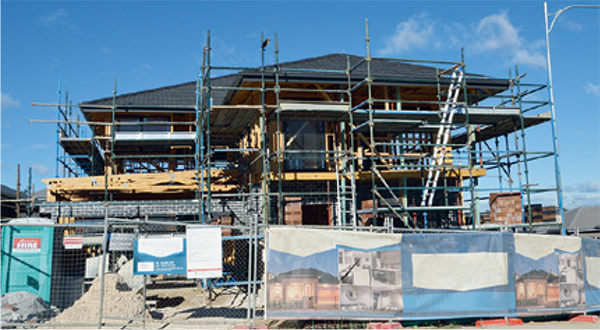
- Is the scaffold erected, altered and dismantled only by licensed scaffolders? (A high risk work (HRW) licence is required where a person can fall more than 4 metres.)
- Have you told unlicenced workers they must not alter the scaffold and advised them on how to arrange alteration if they need access?
- Is the scaffold erected using safe work methods and in accordance with the supplier’s and/or manufacturer’s instructions and relevant Australian Standards?
- Has written confirmation (e.g, a hand-over certificate) been provided to verify the scaffold is complete, safe and compliant?
- Has a competent person inspected the scaffold before first use, after an incident that could affect the stability, after repairs and at least every 30 days?
- Are all standards provided with base plates and, where necessary, timber sole-boards?
- Is the scaffold adequately braced?
- Is the scaffold adequately secured to the building or structure to prevent collapse?
- Are there handrails, mid-rails and toe boards (or other suitable protection) at every edge to prevent people and objects from falling?
- Are guards provided to prevent stacked materials such as bricks falling from scaffolds (e.g, such as kickboards, brick guards or steel mesh)?
- Are the working platforms fully planked and are the planks arranged to avoid slipping or tripping?
- Are there effective barriers or warning notices in place to stop people from using an incomplete scaffold?
- Has the scaffold been designed to carry the weight of people and materials stored on it, and are these evenly distributed?
- Are gates (including guardrails being used as gates) and hatches across access points self-closing?
- Is the gap between the building/structure and the scaffold less than 225 mm?
- Are scaffolds at least 4 m from powerlines? If not, have you consulted with the service provider?
- Are the wheels of mobile scaffolds locked when in use and are the platforms cleared before they are moved?
- Are outriggers on mobile scaffolds in place and secure?
Stairways and voids

- Are all voids protected by covers that are secured in place and clearly marked as voids?
- Are all stairways and/or ladder access points protected against falls risks by the installation of fences and/or barriers?
See how to prevent falls using simple void protection
Ladders
- Choose the right tool for the job – can you buy or hire some alternative equipment that would provide a safer means of access (such as mobile scaffold, elevated work platform or platform ladder)?
- Is the ladder in good condition and industrial rated (120 kg)?
- Is the ladder set up on a flat, stable surface?
- Do you need ladder safety devices like leg levellers, anti-slip gutter guards and stabilisers?
- Is the ladder high enough so that users don’t have to over-reach?
- Are materials being transported safely (i.e, not carried up a ladder)? Use a pulley or rope and bucket system instead
Extension ladders
- Is the ladder secured at the top and bottom to prevent it slipping sideways and outwards? If this isn’t possible, have someone hold it in place while in use.
- Does it extend at least 1 m above the landing place?
- Is it resting against a solid surface that can support it and you?
- Is it angled at a ratio of 1:4 (the base of the ladder 1 m away from the structure for every 4 m of height)?
A-frame style step ladders
- Is the ladder tall enough so that users don’t have to stand on the top two rungs? If not, a taller ladder is required.
- Are all four feet of the ladder in contact with the ground, and are the locking devices secured?
- Are both feet and one other point of contact e.g., hand, waist or torso, in contact with the ladder? If not, you need a taller ladder or a safer piece of equipment.

Roofs
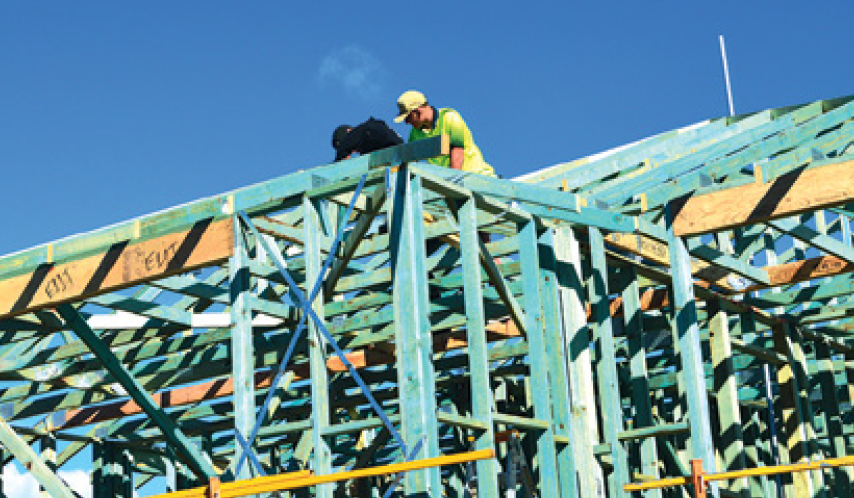
- Has an exclusion zone been set up below the roof work?
- Are roof workers trained and experienced to recognise the risks and are they competent to do the work?
Roofs under construction
- Is there temporary edge protection, such as scaffold or safety rails, to stop people or materials falling?
- Have you considered netting or other fall prevention devices?
Work on roofs
- Has the angle/pitch of the roof been considered when determining fall prevention measures?
- Have you identified fragile or brittle roof materials that are not safe to walk on, such as concrete tiles, cement sheets, asbestos or clear plastic sheeting and sky lights?
- Have you installed temporary edge protection to stop workers falling from the edge of the roof, such as scaffold, roof rails, or an elevating work platform (EWP)?
- Have you installed protections to stop people falling through fragile or brittle roofs, such as guard rails, covers, walkways/crawl boards, exclusion zones?
Work positioning systems (harnesses)
Note: Work positioning systems can only be used if it is not reasonably practicable to provide physical edge protection.
Harnesses require the correct design, set up and user behaviour to ensure its effectiveness.
Total restraint technique is preferred over fall arrest, as it stops the user from reaching the edge or fall hazard.
Fall arrest systems must only be used as a last resort, and cannot be safely used on a single storey building.
- Are workers trained and competent in the setting up and safe use of harnesses if required?
- Has an emergency heights rescue plan been developed for harness-based work?
Electricity and essential services
- Have you contacted Before You Dig Australia to identify and assess underground services?
- For underground services, have you planned, prepared and potholed before proceeding?
- Have you clearly identified, marked and/or isolated existing services present on site (above and below ground, such as electric cables, gas mains, water mains and phone lines)?
- Where there are overhead powerlines, has the service provider been contacted?
- Where there are overhead lines, has the electricity supply been turned off, or have other precautions been taken, such as providing ‘tiger tails’, ‘goal posts’ or taped markers and/or barriers as an identifier to prevent inadvertent contact?
- For electrical tools on site, is a Residual Current Device (RCD) or Isolating Transformer used and tested?
- Are tools and equipment well-maintained, checked regularly for defects and taken out of service if a defect is found?
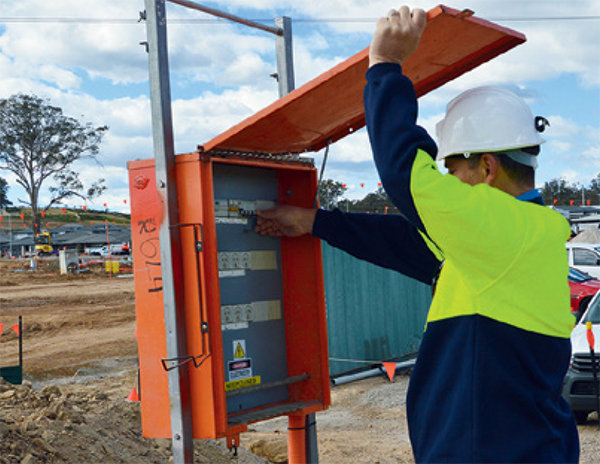
- Are temporary switchboards, tools and electrical items regularly inspected, tested and tagged by a competent person?
- Are cables and leads protected from being damaged or creating trip hazards?
- Is the switchboard easily accessible?
More information
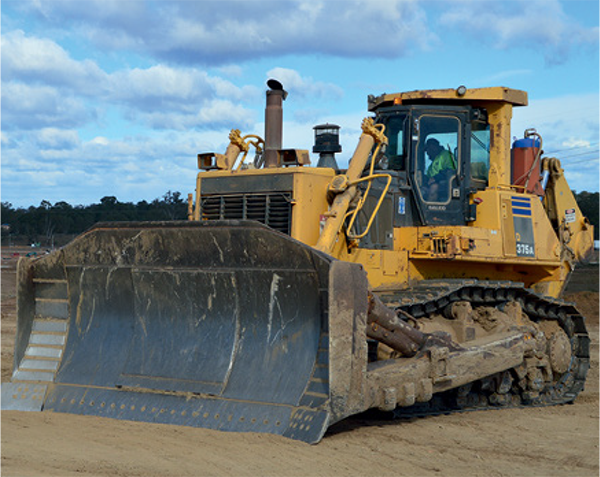
Traffic, vehicles and mobile plant
- Are vehicles and pedestrians physically separated by barriers, markings and/or signage?
- If required, has a qualified person developed a traffic control plan?
- Do the traffic controllers hold the correct qualification?
- Can reversing be avoided? If not, are properly trained spotters used?
- Have operators received proper training/licences and are they competent and fit to use vehicles or plant?
- Have mobile plant prestart checks been done and any issues addressed?
- Do the operators of mobile cranes hold the relevant high risk work licence?
- Has a verification of competency (VOC) been conducted?
- Are work vehicles well-maintained and maintenance records present and up-to-date?
- If you need to work on or drive across sloping ground, have you checked that the plant and vehicles are safe to use?
- Do you always check that securing pins are in place on the excavator for semi-automatic quick hitches?
- Are all safety attachments and devices in place and working?
- Has a geotechnical report been obtained to confirm the ground can take the load?

More information
Site security and protecting the public
- Have you provided adequate site fencing to prevent unauthorised access to your site?
- Is your site fencing secured adequately to prevent collapse in high winds?
- Have you provided site signage with the principal contractor’s name, 24 hr contact number and site office location?
- Is a fire-retardant mesh/fabric required to prevent the spread of materials, dust and debris outside the site?
- Is the public protected from falling materials?
When work has stopped for the day:
- Is the boundary fence secure?
- Have warning entry signs to prevent unauthorised access been erected?
- Have steps been taken to prevent any unauthorised access, (such as removing ladders)?
- Are excavations and openings securely covered or fenced off?
- Is all plant immobilised to prevent unauthorised use? Are bricks and materials safely stacked?
- Are flammable or dangerous substances locked away in secure storage places?
More information
Walkways, access and egress
- Can everyone get to their place of work safely – and work there safely?
- Are access routes well defined, in good condition and clear of debris and materials?
- Has suitable edge protection been installed?
- Are voids protected and clearly marked with fixed covers to prevent falls?
- Is the site tidy and are materials segregated and stored safely?
- Is there sufficient lighting for access and egress purposes and for people to perform their work safely?
Trenches and excavations
- Have you obtained and kept copies of current underground essential services information (location and depth) relating to the workplace and adjacent areas by contacting Before you Dig Australia?
- Have you planned, prepared and potholed before proceeding?
- Are trenches/excavations secured to prevent unauthorised access, falls and falling objects?
- Is there a support system in place to prevent collapse such as shoring, benching or battering?
- Is a safe method used for putting in the support without people working in an unsupported trench?
- Is there safe access and egress to and from the excavation?
- Is the excavation fenced off from unauthorised access?
- Could the excavation affect the stability of neighbouring structures or services?
- Are materials, spoil and mobile plant kept away to prevent loading and potential collapse of the edge of the excavation?
- Is the excavation regularly inspected by a competent person, such as a geotechnical engineer?
- Are the results of inspections recorded and communicated to workers?
- Have you considered the potential risk of silica exposure? (see silica section for more info).
More information
Loading and unloading materials
- Have you planned your method of loading/unloading materials?
- Is there an exclusion zone around the loading/unloading area?
- Do mechanical aids and other lifting equipment have a current certification and are they well maintained?
- Before removing straps/stabilisers, have you checked that the load has not moved or destabilised during the journey?
- Do you have to access the back of the vehicle or truck bed to avoid work at heights, or can the preparation work be done from ground level?
- Do operators of vehicle loading cranes with a capacity of 10 metre tonnes or more hold a high risk work licence?
- Do operators of personnel and/or material hoists hold the appropriate high risk work licence?
Hazardous manual tasks
Hazardous manual tasks are a leading cause of musculoskeletal disorders.
Can you:
- Ensure materials are stored close to where they will be used?
- Ensure workbenches are at a suitable height for workers?
- Choose lighter materials?
Where possible, eliminate or reduce:
- Repetitive or sustained force
- High or sudden forces
- Repetitive movement
- Sustained or awkward posture
- Exposure to vibration
- In your planning have you considered the work area design and layout, systems of work, and the work environment?
- Have you considered the nature, size, weight and number of objects handled?
- Have you provided suitable information, training and instruction for safe processes and procedures, including the use of mechanical aids and other equipment?
- Use fit-for-purpose mechanical aids such as cranes, hoists, trolleys?
- Use ergonomically designed tools and equipment (e.g., hand tool with vibration dampener)?
- Provide enough resources to promote a reasonable pace and flow of work?
Note: The hierarchy of control should be considered in managing the risk of hazardous manual tasks. A combination of risk controls is necessary to ensure the risk of musculoskeletal disorders are minimised effectively.
More information
Administrative controls such as training in lifting techniques are the least effective way in managing musculoskeletal disorders and cannot be used as the main control measures to manage the risk.
Tools and machinery
- Are the right tools or machinery being used for the job and in accordance with manufacturer’s specifications?
- Are you complying with the manufacturer’s guidelines for inspections, maintenance and repairs?
- Are all moving parts guarded?
- Are guards adequately secured and in good working order?
- Are tools and machinery maintained in good condition and are all safety devices operating as per their intended use?
- Are all operators trained and competent?