
nsw logo NSW Government
SafeWork
  • About
  • News
  • Contact
  • Safety
    starts here
  • Your
    industry
  • Advice &
    resources
  • Legal
    obligations
  • Notify
    SafeWork
  • Compliance &
    prosecutions
  • Licences &
    registrations
  • Home
  • Compliance and prosecutions
  • Incident information releases
  • Mobile elevating platform tip overs - two incidents in 2020
Share
  • facebook
  • linkedin
  • email
Print PDF

Mobile elevating platform tip overs - two incidents in 2020

In recent months SafeWork NSW has been notified of two separate serious incidents where workers using mobile elevating work platforms (MEWPs) have resulted in tip over.

This page references the Work Health and Safety Regulation 2017, which has since been remade as the Work Health and Safety Regulation 2025. Any references to clauses of the 2017 Regulation should now be read as references to the corresponding sections in the 2025 Regulation where applicable.
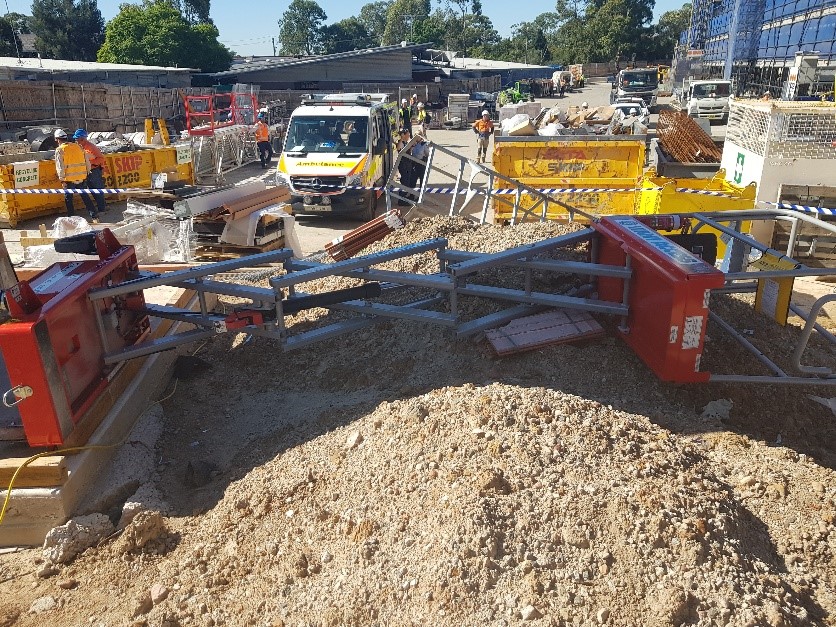
A mobile elevated platform on its side.
The mobile elevating work platform at Kingswood after the incident.

Kingswood

Date of incident: 17 April 2020

A worker on a manually propelled scissor type MEWP, approximately 3 metres high, was using a handheld battery powered screw gun to affix cladding panels to the side of a steel structure. The force applied by the worker in drilling the screws contributed to the MEWP tipping and impacting the ground. The worker sustained bruising to his arm and shoulder as a result of the incident.
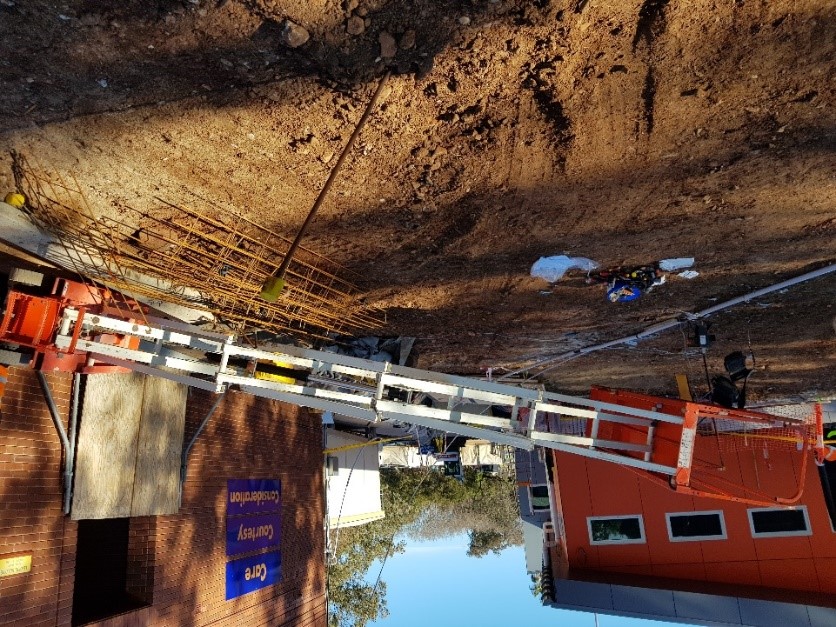
The scissor type mobile elevating work platform after the incident at Tamworth.

Tamworth

Date of incident: 20 July 2020

An electrician and an apprentice were using a scissor type MEWP to remove 34 metres of conduit, containing an electrical cable, from the side of a two-storey building. The MEWP was elevated to just below 6 metres and driven on a concrete path as the brackets were removed one by one. When the final bracket was removed the workers lifted the conduit over their heads and dropped it to the ground. It fell onto the handrail of the platform. The weight and momentum of the conduit contributed to the MEWP to tipping over with both workers inside. Both workers suffered spinal fractures and one worker a fractured eye socket.

Safety information

If working at height, planning should be undertaken to ensure the safest method and correct equipment is used for the job. The decision to use a specific MEWP should not be based solely on the availability of a MEWP at a workplace.

When selecting the type of MEWP to be used be aware of the limitations regarding terrain, slope, wind loading and manual side force. Some MEWPs are not designed for outdoor use or have different operation limitations for outdoor use. Note a maximum side manual force of 200 N is equivalent to a 20kg force at waist height.

If you have determined that a MEWP is the most suitable method to perform the work at height, you must implement ‘reasonably practicable’ control measures to manage the risks associated with using the MEWP throughout the job. These include:

  • choose the right MEWP for the job and only use it for the purpose it was designed
  • ensure that information, instruction and training is provided to workers who use MEWPs
  • train workers in emergency procedures so occupants can be rescued in the event of an emergency
  • hold a high-risk work licence for boom type MEWPs with a boom length over 11 metres
  • carry out a prestart (pre-operational) inspection and record the information in the logbook
  • ensure the MEWP is suitable for the ground conditions, including gradeability
  • do not exceed the safe working load of the platform (some MEWPs have dual ratings to limit the number of people in the platform if used outdoors)
  • do not exceed the manual side force (as shown on the compliance plate) when carrying out activities such as drilling, pushing
  • do not work in locations where the loss of control of external objects could impact the platform of the MEWP, e.g. tree branches, steelwork
  • do not use indoor rated MEWPs outdoors
  • make sure outdoor rated MEWPs are not operated outside if wind speed rating exceeds the maximum limits (as shown on the compliance plate)
  • wear a safety harness if there is a risk of falling from a height and ensure it is attached to a designated anchor point on the MEWP

Further information

You can also refer to the following guidance materials:

  • Work Health and Safety Regulation 2025:
    • Section 214 – Powered mobile plant – General control of risk
  • SafeWork NSW – Code of practice – Managing the risk of plant in the workplace (PDF 2.1MB)
  • SafeWork NSW – Code of practice – Managing the risk of falls at workplaces (PDF 4.1MB)
  • AS 2550.10-2006 Cranes hoists and winches – Safe use – Mobile elevating work platforms (PDF 597kb)
Back to top
  • Safety starts here
    • Safety overview
      • First aid in the workplace
      • Emergency plans
      • If you get injured at work poster
      • Mandatory injury register
      • When an incident occurs
      • Health and safety training in the workplace
      • Workers compensation insurance
      • Return to work program
    • Safety support
      • Your rights and responsibilities for health and safety
      • Training & orienting workers
      • Getting workers to contribute to health and safety
      • Managing risk in the workplace
      • Workplace inspections
      • Investigating and reporting incidents
      • Supervisors
    • Building a health & safety culture
      • Building a high performing health &safety culture
      • Active health & safety management
      • Planning for health & safety
      • Leadership and commitment
    • Consultation at work
      • Your duty to consult
      • Consultation case studies and videos
      • Workgroups
      • Safety committees
      • Health and safety representative's toolkit
      • Safety complaints
      • Resolving issues
      • Consultation tools to help
      • Entry permits
      • Discriminatory conduct
    • At risk workers
    • Physical safety at work (the basics)
      • Emergency plans
      • Facilities at work
      • Instruction and training
      • Personal protective equipment (PPE)
      • Pregnancy
      • Sedentary work
      • Violence
      • Bushfire smoke
    • Mental health & safety (the basics)
      • Alcohol and other drugs
      • Mental health @ work
      • Workplace stress
    • SeasonalSAFE
  • Your industry
    • Accommodation and food services
      • Hospitality
    • Administrative and support services
    • Agriculture, forestry and fishing
      • Plant nurseries
      • Farming
    • Arts and recreation services
    • Building and construction
      • Construction work
      • Demolition
      • House construction
    • Education and training
    • Financial and insurance services
    • Health care and social assistance
      • Aged care
      • Hospitals
      • Early childhood education and care
      • Disability support
    • Information media and telecommunications
    • Manufacturing
      • Leading safer manufacturing workplaces
      • Safe work leader talks: safety in manufacturing
    • Personal care and other services
    • Public administration and safety
    • Rental, hiring and real estate services
    • Retail trade
      • Shop with respect poster - A4 size
      • Shop with respect poster - A3 size
    • Transport, postal and warehousing
      • Food delivery industry
    • Wholesale trade
    • Waste management and recycling
  • Advice & resources
    • Campaigns
      • It’s the safe way or 'no way'
      • Getting home safe is what matters most
      • Industrial gate safety
      • International Day of Mourning
      • National Asbestos Awareness Week
      • NSW Dust Strategy
      • WHS Excellence Showcase
      • Falls in transport
    • Free advisory visits and workshops
    • Labour hire
    • Video library
    • Incident animations
    • Online safety webinars
    • SafeWork newsletters
    • Speak Up Save Lives app
    • Translated resources
      • Arabic health and safety resources
      • Assyrian health and safety resources
      • Chinese health and safety resources
      • Dari health and safety resources
      • Fiji health and safety resources
      • Filipino health and safety resources
      • French health and safety resources
      • German health and safety resources
      • Hindi health and safety resources
      • Kiribati health and safety resources
      • Khmer health and safety resources
      • Korean health and safety resources
      • Malay health and safety resources
      • Nepali health and safety resources
      • Punjabi health and safety resources
      • Samoa health and safety resources
      • Spanish health and safety resources
      • Tonga health and safety resources
      • Thai health and safety resources
      • Vietnamese (Tiếng Việt) health and safety resources
  • Legal obligations
    • Employer and business obligations
      • Directors and officers
      • Due diligence
      • Primary duty of care
      • Duty to consult
      • Register of injuries
      • Injuries at work
      • Return to work programs
      • Managing hazards and risks
    • Worker obligations
    • Medical practitioner's obligation to notify of a disease
    • Diversity
    • Visitor obligations
    • Contractors and labour hire
    • Volunteering
    • Strata title and body corporate
    • Legislation
  • Notify SafeWork
    • Incident notification
    • Adverse health monitoring report notification
    • Asbestos notifications
    • Blasting notifications
    • Demolition notifications
    • Fireworks displays notifications
    • Hazardous chemicals notifications
    • Lead notifications
    • Legacy engineered stone notification
    • Provisional Improvement Notices (PIN)
    • Workplace Exposure Standard (WES) exceedance notification
    • Silica worker register (SWR) notification
      • FAQs
  • Compliance and prosecutions
    • Respect at work
    • Incident information releases
    • Improvement, prohibition and penalty notices
    • Internal review of inspector and regulator decisions
    • SafeWork Inspectors
    • Enforceable undertakings
    • Prosecutions
    • High risk workplaces and repeat offenders program
    • Contact our Legal Services
  • Licences and registrations
    • White cards
    • Licences
      • Evidence of identity
      • Regularly check licences
      • Explosives and fireworks licences
      • High risk work licences
      • Traffic Control Work Training
      • Class A asbestos removal licence
      • Class B asbestos removal licence
      • Asbestos assessor licence
      • Unrestricted demolition licence
      • Restricted demolition licence
      • Proof of identity
    • Plant registrations
      • Plant item registration
      • Plant design registration
    • High risk work licence assessor accreditation
    • Registered training organisations (RTOs)
      • How to become an approved RTO to deliver asbestos training
      • General construction induction RTOs
      • High risk work RTOs
      • HSR training providers
      • Traffic controller training
  • Resources
    • Hazards A-Z
    • Resource library
    • Risk radar
    • Speak Up Save Lives
  • SafeWork NSW careers
    • Become a SafeWork NSW Inspector
Community
  • Events
  • Accessibility
  • Order a publication
  • Subscribe – SafeWork newsletters
Legal
  • Privacy
  • Right to Information
  • Terms
  • Disclaimer
  • Copyright
Related sites
  • SIRA (workers compensation)
  • TestSafe
  • icare

Contact

Contact us 13 10 50

Follow us

  • facebook
  • youtbue
  • linkedin
Send us your feedback

Follow us

  • facebook
  • youtbue
  • linkedin
  • Sitemap
  • nsw.gov.au
  • Ministerial media releases
NSW SafeWorks logo NSW SafeWorks NSW SafeWorks logo NSW SafeWorks