nsw logo NSW Government
SafeWork
  • About
  • News
  • Contact
  • Safety
    starts here
  • Your
    industry
  • Advice &
    resources
  • Legal
    obligations
  • Notify
    SafeWork
  • Compliance &
    prosecutions
  • Licences &
    registrations
  • Home
  • Resource library
  • Position paper - cladding over asbestos containing materials
Share
  • facebook
  • linkedin
  • email
Print PDF

Position paper - cladding over asbestos containing materials

This position paper relates to a trend in the residential sector where asbestos cement sheeting is clad with new, non-asbestos products.

This practice causes considerable damage to the asbestos containing material (ACM), creates asbestos exposure risks and generates substantial clean-up costs.

Our position

Whether you are a homeowner or a person conducting a business or undertaking (PCBU), where asbestos is present, a licensed asbestos removalist should be engaged to remove any ACM before cladding. Where ACM has been removed and a flat surface is required to install new cladding, a non-asbestos containing material must be used. Removing ACM before cladding eliminates the risk of inhaling asbestos fibres caused by any future breakage or refurbishment of the exterior of the property. After the ACM is removed by a licensed asbestos removalist, a clearance certificate must be issued by an independent, competent person.

Background

Our inspectors have observed that only asbestos cover strips are being removed from the external asbestos wall sheeting of houses to provide a flat surface to install the new cladding material. The removal of these strips using pinch bars or similar tools, and nailing new non-asbestos cladding into the existing ACM, causes breakage and contamination of the ground and wall cavities where work is being undertaken.

Risks of over-cladding ACM

Over-cladding ACM creates a risk of:

  • breakage, leading to asbestos contamination (both by removing the timber connecting strips and nailing in new non-asbestos cladding)
  • ACM being hidden from view, creating potential for disturbance during future refurbishment works
  • significant health risks from inhaling airborne asbestos fibres (if ACM is in a stable material (such as fibro) and is in good condition, it poses little health risk, however, where fibro is broken, damaged or disturbed, it can release airborne fibres which may lead to asbestos related diseases include asbestosis, lung cancer and mesothelioma).

PCBU obligations under the WHS Regulation 2017

The Work Health and Safety (WHS) Regulation 2017 places several obligations on PCBUs in relation to demolition or refurbishment on a structure:

  • Clause 457 – Refurbishment of residential premises. This clause states that a PCBU who is to carry out refurbishment of residential premises must ensure:
    • (a) that all asbestos that is likely to be disturbed is identified
    • (b) so far as is reasonably practicable, that the asbestos is removed before the refurbishment is commenced.
  • The Work Health and Safety Act 2011 (Section 18) defines 'reasonably practicable'. Our position is that it is 'reasonably practicable' to remove ACM before refurbishment on most occasions. The removal of over 10 square meters of non-friable asbestos must be done by a licensed asbestos removalist. Refer to the list of licensed asbestos removalists.
  • Where it is not reasonably practicable to remove the ACM before refurbishment, PCBUs must comply with all regulations outlined in chapter eight of the WHS Regulation 2017 including:
    • ensuring staff have undertaken asbestos awareness training (identification, safe handling, and suitable control measures for asbestos and ACM)
    • ensuring staff have undertaken health monitoring if the work is ongoing
    • not using, directing or allowing a worker to use any of the following equipment on asbestos or ACM unless to use of the equipment is controlled
      1. power tools,
      2. brooms
      3. any other implements that cause the release of airborne asbestos into the atmosphere.

Images of issues associated with over-cladding
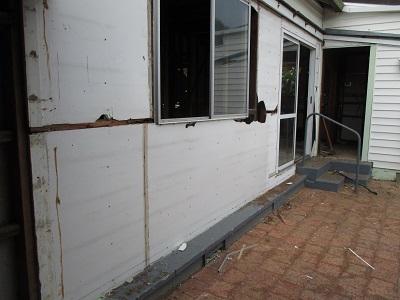
Damage caused to asbestos sheeting when removing connecting strips
Figure 1: Damage caused to asbestos sheeting when removing connecting strips
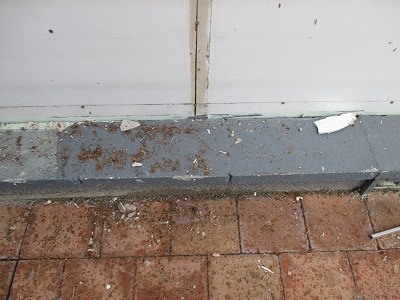
Asbestos contamination on the ground
Figure 2: Asbestos contamination on the ground
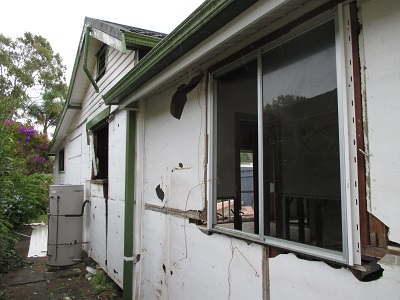
Damage to ACM sheeting in preparation for cladding
Figure 3: Damage to ACM sheeting in preparation for cladding

Download a pdf of this position paper.

Back to top
  • Safety starts here
    • Safety overview
      • First aid in the workplace
      • Emergency plans
      • If you get injured at work poster
      • Mandatory injury register
      • When an incident occurs
      • Health and safety training in the workplace
      • Workers compensation insurance
      • Return to work program
    • Safety support
      • Your rights and responsibilities for health and safety
      • Training & orienting workers
      • Getting workers to contribute to health and safety
      • Managing risk in the workplace
      • Workplace inspections
      • Investigating and reporting incidents
      • Supervisors
    • Building a health & safety culture
      • Building a high performing health &safety culture
      • Active health & safety management
      • Planning for health & safety
      • Leadership and commitment
    • Consultation at work
      • Your duty to consult
      • Consultation case studies and videos
      • Workgroups
      • Safety committees
      • Health and safety representative's toolkit
      • Safety complaints
      • Resolving issues
      • Consultation tools to help
      • Entry permits
      • Discriminatory conduct
    • At risk workers
    • Physical safety at work (the basics)
      • Emergency plans
      • Facilities at work
      • Instruction and training
      • Personal protective equipment (PPE)
      • Pregnancy
      • Sedentary work
      • Violence
      • Bushfire smoke
    • Mental health & safety (the basics)
      • Alcohol and other drugs
      • Mental health @ work
      • Workplace stress
    • SeasonalSAFE
  • Your industry
    • Accommodation and food services
      • Hospitality
    • Administrative and support services
    • Agriculture, forestry and fishing
      • Plant nurseries
      • Farming
    • Arts and recreation services
    • Building and construction
      • Construction work
      • Demolition
      • House construction
    • Education and training
    • Financial and insurance services
    • Health care and social assistance
      • Aged care
      • Hospitals
      • Early childhood education and care
      • Disability support
    • Information media and telecommunications
    • Manufacturing
      • Leading safer manufacturing workplaces
      • Safe work leader talks: safety in manufacturing
    • Personal care and other services
    • Public administration and safety
    • Rental, hiring and real estate services
    • Retail trade
      • Shop with respect poster - A4 size
      • Shop with respect poster - A3 size
    • Transport, postal and warehousing
      • Food delivery industry
    • Wholesale trade
    • Waste management and recycling
  • Advice & resources
    • Campaigns
      • It’s the safe way or 'no way'
      • Getting home safe is what matters most
      • Industrial gate safety
      • International Day of Mourning
      • National Asbestos Awareness Week
      • NSW Dust Strategy
      • WHS Excellence Showcase
      • Falls in transport
    • Free advisory visits and workshops
    • Labour hire
    • Video library
    • Incident animations
    • Online safety webinars
    • SafeWork newsletters
    • Speak Up Save Lives app
    • Translated resources
      • Arabic health and safety resources
      • Assyrian health and safety resources
      • Chinese health and safety resources
      • Dari health and safety resources
      • Fiji health and safety resources
      • Filipino health and safety resources
      • French health and safety resources
      • German health and safety resources
      • Hindi health and safety resources
      • Kiribati health and safety resources
      • Khmer health and safety resources
      • Korean health and safety resources
      • Malay health and safety resources
      • Nepali health and safety resources
      • Punjabi health and safety resources
      • Samoa health and safety resources
      • Spanish health and safety resources
      • Tonga health and safety resources
      • Thai health and safety resources
      • Vietnamese (Tiếng Việt) health and safety resources
  • Legal obligations
    • Employer and business obligations
      • Directors and officers
      • Due diligence
      • Primary duty of care
      • Duty to consult
      • Register of injuries
      • Injuries at work
      • Return to work programs
      • Managing hazards and risks
    • Worker obligations
    • Medical practitioner's obligation to notify of a disease
    • Diversity
    • Visitor obligations
    • Contractors and labour hire
    • Volunteering
    • Strata title and body corporate
    • Legislation
  • Notify SafeWork
    • Incident notification
    • Adverse health monitoring report notification
    • Asbestos notifications
    • Blasting notifications
    • Demolition notifications
    • Fireworks displays notifications
    • Hazardous chemicals notifications
    • Lead notifications
    • Legacy engineered stone notification
    • Provisional Improvement Notices (PIN)
    • Workplace Exposure Standard (WES) exceedance notification
    • Silica worker register (SWR) notification
      • FAQs
  • Compliance and prosecutions
    • Respect at work
    • Incident information releases
    • Improvement, prohibition and penalty notices
    • Internal review of inspector and regulator decisions
    • SafeWork Inspectors
    • Enforceable undertakings
    • Prosecutions
    • High risk workplaces and repeat offenders program
    • Contact our Legal Services
  • Licences and registrations
    • White cards
    • Licences
      • Evidence of identity
      • Regularly check licences
      • Explosives and fireworks licences
      • High risk work licences
      • Traffic Control Work Training
      • Class A asbestos removal licence
      • Class B asbestos removal licence
      • Asbestos assessor licence
      • Unrestricted demolition licence
      • Restricted demolition licence
      • Proof of identity
    • Plant registrations
      • Plant item registration
      • Plant design registration
    • High risk work licence assessor accreditation
    • Registered training organisations (RTOs)
      • How to become an approved RTO to deliver asbestos training
      • General construction induction RTOs
      • High risk work RTOs
      • HSR training providers
      • Traffic controller training
  • Resources
    • Hazards A-Z
    • Resource library
    • Risk radar
    • Speak Up Save Lives
  • SafeWork NSW careers
    • Become a SafeWork NSW Inspector
Community
  • Events
  • Accessibility
  • Order a publication
  • Subscribe – SafeWork newsletters
Legal
  • Privacy
  • Right to Information
  • Terms
  • Disclaimer
  • Copyright
Related sites
  • SIRA (workers compensation)
  • TestSafe
  • icare

Contact

Contact us 13 10 50

Follow us

  • facebook
  • youtbue
  • linkedin
Send us your feedback

Follow us

  • facebook
  • youtbue
  • linkedin
  • Sitemap
  • nsw.gov.au
  • Ministerial media releases
NSW SafeWorks logo NSW SafeWorks NSW SafeWorks logo NSW SafeWorks