
High winds in construction
Learn how to manage work health and safety risks from high winds on construction sites, including hazards, controls, and ways to prevent workplace incidents.
On this page
High winds can create serious safety risks on construction sites.
People Conducting a Business or Undertaking (PCBUs) must identify and manage these risks to help prevent serious injuries and fatalities.
What are high winds?
High winds are strong or gusty winds that can make people, plant, materials or structures unstable.
High winds are often linked to severe weather events, but their speed and direction are also affected by:
- the time of day
- the season
- changes in temperature and atmospheric pressure
- the terrain, and
- structures and objects on the land.
On construction sites, wind:
- can quickly change direction and intensity
- is often stronger at height, and
- can be more dangerous around open structures, unfinished buildings, exposed edges and temporary works.
Risks of high winds
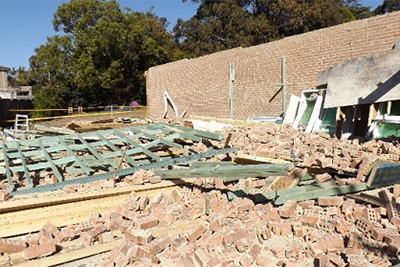
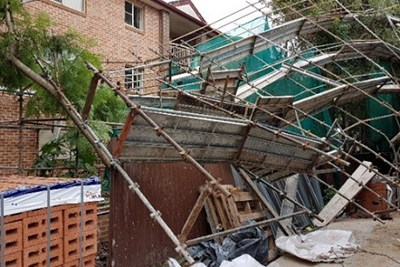
In recent years, serious incidents involving the collapse of masonry walls and scaffolds have been reported to SafeWork NSW.
Masonry and other walls
Scaffolds
Other risks
- Loose materials, tools, signage, cladding or sheeting becoming airborne.
- Falling objects striking workers, visitors or members of the public.
- Workers losing balance, especially when working at heights or on exposed work platforms
- Cranes, lifting operations and elevated work platforms becoming unstable or unsafe.
- Dust and debris reducing visibility or causing eye injuries.
- Slips, trips and falls when wind is combined with wet weather.
- Increased risk near trees, overhead electric lines and unsecured loads.
Safety standards and classification
There is no single wind speed that makes all construction work unsafe. It depends on:
- the stage of the build
- the work being done
- the plant and materials on site, and
- how exposed the site is to wind.
Construction sites may need extra controls or stop-work decisions at lower wind speeds, depending on the work, site conditions, plant, materials and structures involved.
High wind warnings and alerts are available on the Bureau of Meteorology website.
How to manage the risks
Duty holders must prepare for high winds.
The safest option is to remove the risk where possible. This may mean delaying outdoor work until the weather improves.
If high winds create an immediate risk, stop work and move people to a safe area. Do not restart work until the risks have been checked and controlled.
Before work starts
Before work starts, duty holders should decide how high wind risks will be managed and when work must stop. This should include:
- checking weather forecasts before starting work
- reviewing site-specific risk assessments and safe work method statements
- confirming wind speed limits for cranes, elevating work platforms and other plant
- checking wind loading requirements for scaffolds, temporary works and temporary structures
- getting advice from a designer, engineer or competent person if structural stability is unclear
- setting clear triggers for extra controls or stopping work, and
- telling workers how wind will be monitored, who can stop work and what to do if conditions become unsafe.
Attended sites
While work is underway, duty holders should:
- monitor wind and weather conditions throughout the day
- stop work when wind conditions reach the agreed trigger points or become unsafe
- move people away from unsafe areas
- brace or support incomplete walls and other unstable structures
- check scaffolds, temporary structures, screens, formwork, falsework and fencing remain secure
- secure loose materials, tools, signage, cladding, sheeting and waste
- set up and maintain exclusion zones where objects could fall or become airborne
- stop plant, crane and lifting operations when manufacturer limits are reached
- provide eye protection and fall prevention where needed, and
- review controls if weather, site conditions or work activities change.
Note for masonry and other walls
- Do not seek shelter behind walls of incomplete structures during extreme weather events, even if temporary supports are in place.
- Sequence construction so that masonry walls are constructed at the same time as cross walls or returns.
- Provide additional temporary support for lintels or other structural elements that place concentrated loads onto green masonry.
- Avoid placing lateral loads on walls not yet secured into the structure, e.g. do not lean materials against the walls.
Unattended sites
Unattended sites should also be made safe before severe weather by:
- clearing debris
- blocking access to elevated areas, scaffolds and ladders
- securing plant and equipment
- storing tools and hazardous materials safely
- covering pits and trenches, and
- showing after-hours contact details.
Resources
For more information, see:
- Building and construction safety guidance from SafeWork NSW
- Guidance on working in hazardous weather from Safe Work Australia
- Weather warnings and alerts from the Bureau of Meteorology
- Check wind direction and speed on Windfinder