
nsw logo NSW Government
SafeWork
  • About
  • News
  • Contact
  • Safety
    starts here
  • Your
    industry
  • Advice &
    resources
  • Legal
    obligations
  • Notify
    SafeWork
  • Compliance &
    prosecutions
  • Licences &
    registrations
  • Home
  • Resource library
  • Working with livestock: Fact sheet
Share
  • facebook
  • linkedin
  • email
Print PDF

Working with livestock: Fact sheet

Farmers are at risk of serious injuries or even death when moving, separating, loading or unloading livestock, and undertaking animal husbandry.

Issue
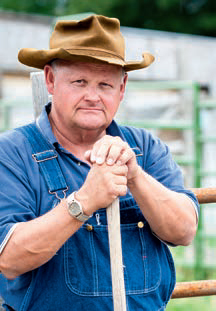
Working with livestock

Farmers are at risk of serious injuries or even death when moving, separating, loading or unloading livestock, and undertaking animal husbandry. Contributing factors are poorly designed pens, unsafe animal handling practices, fractious animals and insufficient training. It's important to be aware of the risks and take appropriate measures to minimise the risk of injury.

Recommendations

Keeping workers safe

  • Train your workers in the principles of cattle and sheep handling.
  • Closely supervise new and inexperienced workers.
  • Avoid working alone when loading or unloading stock.
  • Ensure the operator is in a safe position when loading/unloading animals.
  • When working indoors (eg in a shearing shed), ensure there is adequate lighting and ventilation.
  • Reduce the risk of distraction – eg using a mobile phone – when working with livestock.
  • Wear appropriate clothing and personal protective equipment.
  • Have a first aid kit near the area of work.

Pens and yards
Working with livestock

  • Ensure latches, bolts and chains on gates are in good working order, and robust enough to contain stock.
  • Design handling facilities to suit the number and type of livestock you have, and the type of work you do.
  • Do not overcrowd stock pens. Fill pens to two-thirds capacity, to give stock room to move.
  • Maintain facilities in good condition.
  • Keep pens and yards free of any obstructions – eg protruding nails, bolts, wire, trip hazards – to avoid injury and ensure free-flowing stock.
  • Use self-locking gate latches, where possible.
  • Ensure escape routes are clear, accessible and clearly marked.
  • Use animal-handling aids to move animals, where possible.
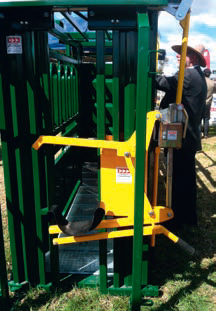
  • Use crushes, head bails and cradles when animals need restraining, or when undertaking animal husbandry activities.

Cattle

  • Have a system in place to identify and manage difficult or fractious cattle.
  • Disbud cattle early.
  • Ensure the yard is well-designed, to assist the smooth flow of cattle.
  • Ensure loading facilities have well-positioned gates, and consider adopting curved races and covered sides, to improve cattle movement.
  • Use the natural 'following behaviour' of cattle to move them quietly and smoothly.
  • Ensure loading ramp is not too steep or too slippery.
  • Consider low-stress handling methods.
  • Ensure the operator is in a safe position in drafting races.

Movement of sheep

  • Sheep should have a clear, unobstructed view of the direction they are heading.
  • Use wide laneways so that livestock can see the rest of the mob.
  • Use wide gates to maintain good sheep flow, whenever possible.
  • Ideally, sheep should take a familiar route and direction through the yards for all handling operations.
  • Entrances to sheds, loading ramp, and dip should be placed along the route sheep usually take through the yards.
  • Take sheep behaviour into account when positioning handling facilities – eg generally sheep will move towards the receiving yards in anticipation of escape or release to their paddock.
  • Sheep move willingly around curves and corners into narrow races.
  • Sheep move better on flat ground, rather than up or down hill – if the land slopes, movement should be across the slope rather than up or down.
  • Sheep move readily towards light, and avoid dark areas, shadows and dead ends.
  • Forward-moving sheep should not see the operator, nor other sheep moving into the yards.
  • Ensure that the operator is in a safe position in drafting races.
  • Use ramps with side rails and walkways to load sheep, where possible.
  • Consider low-stress handling methods.

Further information

The Department of Primary Industries has more information on cattle yards and equipment.

The design of curved cattle corals, yards, races and chutes is outlined in this short video.

Back to top
  • Safety starts here
    • Safety overview
      • First aid in the workplace
      • Emergency plans
      • If you get injured at work poster
      • Mandatory injury register
      • When an incident occurs
      • Health and safety training in the workplace
      • Workers compensation insurance
      • Return to work program
    • Safety support
      • Your rights and responsibilities for health and safety
      • Training & orienting workers
      • Getting workers to contribute to health and safety
      • Managing risk in the workplace
      • Workplace inspections
      • Investigating and reporting incidents
      • Supervisors
    • Building a health & safety culture
      • Building a high performing health &safety culture
      • Active health & safety management
      • Planning for health & safety
      • Leadership and commitment
    • Consultation at work
      • Your duty to consult
      • Consultation case studies and videos
      • Workgroups
      • Safety committees
      • Health and safety representative's toolkit
      • Safety complaints
      • Resolving issues
      • Consultation tools to help
      • Entry permits
      • Discriminatory conduct
    • At risk workers
    • Physical safety at work (the basics)
      • Emergency plans
      • Facilities at work
      • Instruction and training
      • Personal protective equipment (PPE)
      • Pregnancy
      • Sedentary work
      • Bushfire smoke
    • SeasonalSAFE
  • Your industry
    • Accommodation and food services
      • Hospitality
    • Administrative and support services
    • Agriculture, forestry and fishing
      • Plant nurseries
      • Farming
    • Arts and recreation services
    • Building and construction
      • Construction work
      • Demolition
      • House construction
      • Codes of practice
    • Education and training
    • Financial and insurance services
    • Health care and social assistance
      • Aged care
      • Hospitals
      • Early childhood education and care
      • Disability support
    • Information media and telecommunications
    • Manufacturing
      • Leading safer manufacturing workplaces
      • Safe work leader talks: safety in manufacturing
    • Personal care and other services
    • Public administration and safety
    • Rental, hiring and real estate services
    • Retail trade
      • Shop with respect poster - A4 size
      • Shop with respect poster - A3 size
    • Transport, postal and warehousing
      • Food delivery industry
    • Wholesale trade
    • Waste management and recycling
  • Advice & resources
    • Campaigns
      • It’s the safe way or 'no way'
      • Getting home safe is what matters most
      • Industrial gate safety
      • International Day of Mourning
      • National Asbestos Awareness Week
      • NSW Dust Strategy
      • WHS Excellence Showcase
      • Falls in transport
    • Free advisory visits and workshops
    • Labour hire
    • Video library
    • Incident animations
    • Online safety webinars
    • SafeWork newsletters
    • Speak Up Save Lives app
    • Translated resources
      • Arabic health and safety resources
      • Assyrian health and safety resources
      • Chinese health and safety resources
      • Dari health and safety resources
      • Fiji health and safety resources
      • Filipino health and safety resources
      • French health and safety resources
      • German health and safety resources
      • Hindi health and safety resources
      • Kiribati health and safety resources
      • Khmer health and safety resources
      • Korean health and safety resources
      • Malay health and safety resources
      • Nepali health and safety resources
      • Punjabi health and safety resources
      • Samoa health and safety resources
      • Spanish health and safety resources
      • Tonga health and safety resources
      • Thai health and safety resources
      • Vietnamese (Tiếng Việt) health and safety resources
  • Legal obligations
    • Employer and business obligations
      • Directors and officers
      • Due diligence
      • Primary duty of care
      • Duty to consult
      • Register of injuries
      • Injuries at work
      • Return to work programs
      • Managing hazards and risks
    • Worker obligations
    • Medical practitioner's obligation to notify of a disease
    • Diversity
    • Visitor obligations
    • Contractors and labour hire
    • Volunteering
    • Strata title and body corporate
    • Legislation
  • Notify SafeWork
    • Incident notification
    • Adverse health monitoring report notification
    • Asbestos notifications
    • Blasting notifications
    • Demolition notifications
    • Fireworks displays notifications
    • Hazardous chemicals notifications
    • Lead notifications
    • Legacy engineered stone notification
    • Provisional Improvement Notices (PIN)
    • Workplace Exposure Standard (WES) exceedance notification
    • Silica worker register (SWR) notification
      • FAQs
  • Compliance and prosecutions
    • Respect at work
    • Incident information releases
    • Improvement, prohibition and penalty notices
    • Internal review of inspector and regulator decisions
    • SafeWork Inspectors
    • Enforceable undertakings
      • Years
    • Prosecutions
    • High risk workplaces and repeat offenders program
    • Contact our Legal Services
  • Licences and registrations
    • White cards
    • Licences
      • Evidence of identity
      • Regularly check licences
      • Explosives and fireworks licences
      • High risk work licences
      • Traffic Control Work Training
      • Class A asbestos removal licence
      • Class B asbestos removal licence
      • Asbestos assessor licence
      • Unrestricted demolition licence
      • Restricted demolition licence
      • Proof of identity
    • Plant registrations
      • Plant item registration
      • Plant design registration
    • High risk work licence assessor accreditation
    • Registered training organisations (RTOs)
      • How to become an approved RTO to deliver asbestos training
      • General construction induction RTOs
      • High risk work RTOs
      • HSR training providers
      • Traffic controller training
  • Resources
    • Hazards A-Z
    • Resource library
    • Risk radar
    • Speak Up Save Lives
  • SafeWork NSW careers
    • Become a SafeWork NSW inspector
Community
  • Events
  • Accessibility
  • Order a publication
  • Subscribe – SafeWork newsletters
Legal
  • Privacy
  • Right to Information
  • Terms
  • Disclaimer
  • Copyright
Related sites
  • SIRA (workers compensation)
  • TestSafe
  • icare

Contact

Contact us 13 10 50

Follow us

  • facebook
  • youtbue
  • linkedin
Send us your feedback

Follow us

  • facebook
  • youtbue
  • linkedin
  • Sitemap
  • nsw.gov.au
  • Ministerial media releases
NSW SafeWorks logo NSW SafeWorks NSW SafeWorks logo NSW SafeWorks