
nsw logo NSW Government
SafeWork
  • About
  • News
  • Contact
  • Safety
    starts here
  • Your
    industry
  • Advice &
    resources
  • Legal
    obligations
  • Notify
    SafeWork
  • Compliance &
    prosecutions
  • Licences &
    registrations
  • Home
  • Compliance and prosecutions
  • Incident information releases
  • Electrician receives fatal electric shock
Share
  • facebook
  • linkedin
  • email
Print PDF

Electrician receives fatal electric shock (1 April 2023)

A 33-year-old electrician died from an electric shock while working on a switchboard and coming into contact with a live conductor. This is the second fatality relating to contact with electricity within a month in NSW.
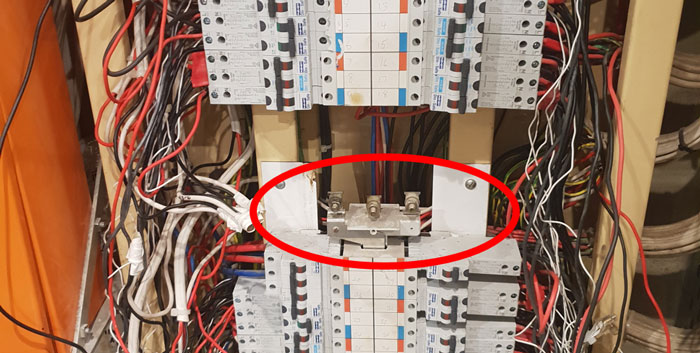
A switchboard with a live conductor highlighted with a red circle
Switchboard where the incident occurred

Safety information

Work on energised (live) equipment is prohibited except under circumstances outlined in the WHS regulation. Before working on or near electrical equipment and installations, ensure that it is switched off and test every circuit and conductor to ensure it has been properly isolated. Lock or tag the circuit to prevent accidental re-energisation.

Working de-energised eliminates significant electrical risks. The key steps for an effective isolation of electrical supply are:

  • consultation: consult with the person who manages or controls the workplace or the premises (for example, to communicate the timing of the work) and notify any other affected people as appropriate
  • isolation:
    • identify the circuit(s) requiring isolation
    • disconnect active conductors from the relevant source(s), noting there may be multiple sources and stand-by systems/generators/photovoltaic systems as well as auxiliary supplies from other boards
    • if a removable or rack out circuit breaker or combined fuse switch is used, it should be racked out or removed then locked open and danger tagged
    • each high-voltage exposed part must be earthed after proven de-energised.
  • securing the isolation: lock the isolating switch(es) or remove and tie back relevant conductors to protect the people carrying out the electrical work
  • tagging: tag the switching points where possible to provide general information to people at the workplace
  • testing: test to confirm the relevant circuits have been de-energised along with any other relevant conductors in the work area, and re-test as necessary.

The safe work procedure 'Test for 'dead' before you touch’ must be applied at all times.

Ensure:

  • where possible, work de-energised. Work on energised (live) equipment is prohibited except under circumstances outlined in WHS regulation.
  • minimise the risk by isolating or separating the hazard or hazardous work practice from any person exposed to it
  • ensure there is adequate training provided by the person completing the works. Electrical work must only be carried out by a licenced or registered electrical worker
  • ensure there are first aid facilities provided at the workplace and each worker has access to the equipment
  • ensure firefighting equipment that is suitable for electrical fires is accessible
  • ensure energised conductors are isolated and/or insulated where necessary to prevent inadvertent contact or flashovers
  • electrical work should be carried out from a position that minimises the risk of inadvertent contact with exposed energised parts and also the risk of an electric shock path being created
  • Personal protective equipment (PPE) (for example protective eyewear, insulated gloves, hard hats, aprons and breathing protection) should be rated for the work to be done. If working on or near energised equipment (where permitted), Arc rated PPE must be provided and used to protect the user from the maximum expected energy available at the work site.

Related guidance material

  • Managing electrical risks in the workplace (PDF, 1337.36 KB) - Codes of Practice
  • Work Health and Safety Regulation 2025 – NSW Legislation
  • Lock Out Tag Out Plant, Equipment and Machinery Energy Isolation Guidelines (PDF, 10885.87 KB) – SafeWork NSW
  • Electrical Safety video – SafeWork NSW
  • Electrical work guidance material – SafeWork NSW
  • Electrical resources – SafeWork NSW
  • AS/NZS 4836:2023 Safe working on or near low voltage electrical installations

Further information

  • Traumatic event management plan – SafeWork NSW
  • Mental health at work – NSW Government
  • Speak Up Save Lives App – SafeWork NSW
  • Subscribe to SafeWork NSW newsletters and updates

View the latest incident information releases at safework.nsw.gov.au

Back to top
  • Safety starts here
    • Safety overview
      • First aid in the workplace
      • Emergency plans
      • If you get injured at work poster
      • Mandatory injury register
      • When an incident occurs
      • Health and safety training in the workplace
      • Workers compensation insurance
      • Return to work program
    • Safety support
      • Your rights and responsibilities for health and safety
      • Training & orienting workers
      • Getting workers to contribute to health and safety
      • Managing risk in the workplace
      • Workplace inspections
      • Investigating and reporting incidents
      • Supervisors
    • Building a health & safety culture
      • Building a high performing health &safety culture
      • Active health & safety management
      • Planning for health & safety
      • Leadership and commitment
    • Consultation at work
      • Your duty to consult
      • Consultation case studies and videos
      • Workgroups
      • Safety committees
      • Health and safety representative's toolkit
      • Safety complaints
      • Resolving issues
      • Consultation tools to help
      • Entry permits
      • Discriminatory conduct
    • At risk workers
    • Physical safety at work (the basics)
      • Emergency plans
      • Facilities at work
      • Instruction and training
      • Personal protective equipment (PPE)
      • Pregnancy
      • Sedentary work
      • Violence
      • Bushfire smoke
    • Mental health & safety (the basics)
      • Alcohol and other drugs
      • Mental health @ work
      • Workplace stress
    • SeasonalSAFE
  • Your industry
    • Accommodation and food services
      • Hospitality
    • Administrative and support services
    • Agriculture, forestry and fishing
      • Plant nurseries
      • Farming
    • Arts and recreation services
    • Building and construction
      • Construction work
      • Demolition
      • House construction
    • Education and training
    • Financial and insurance services
    • Health care and social assistance
      • Aged care
      • Hospitals
      • Early childhood education and care
      • Disability support
    • Information media and telecommunications
    • Manufacturing
      • Leading safer manufacturing workplaces
      • Safe work leader talks: safety in manufacturing
    • Personal care and other services
    • Public administration and safety
    • Rental, hiring and real estate services
    • Retail trade
      • Shop with respect poster - A4 size
      • Shop with respect poster - A3 size
    • Transport, postal and warehousing
      • Food delivery industry
    • Wholesale trade
    • Waste management and recycling
  • Advice & resources
    • Campaigns
      • It’s the safe way or 'no way'
      • Getting home safe is what matters most
      • Industrial gate safety
      • International Day of Mourning
      • National Asbestos Awareness Week
      • NSW Dust Strategy
      • WHS Excellence Showcase
      • Falls in transport
    • Free advisory visits and workshops
    • Labour hire
    • Video library
    • Incident animations
    • Online safety webinars
    • SafeWork newsletters
    • Speak Up Save Lives app
    • Translated resources
      • Arabic health and safety resources
      • Assyrian health and safety resources
      • Chinese health and safety resources
      • Dari health and safety resources
      • Fiji health and safety resources
      • Filipino health and safety resources
      • French health and safety resources
      • German health and safety resources
      • Hindi health and safety resources
      • Kiribati health and safety resources
      • Khmer health and safety resources
      • Korean health and safety resources
      • Malay health and safety resources
      • Nepali health and safety resources
      • Punjabi health and safety resources
      • Samoa health and safety resources
      • Spanish health and safety resources
      • Tonga health and safety resources
      • Thai health and safety resources
      • Vietnamese (Tiếng Việt) health and safety resources
  • Legal obligations
    • Employer and business obligations
      • Directors and officers
      • Due diligence
      • Primary duty of care
      • Duty to consult
      • Register of injuries
      • Injuries at work
      • Return to work programs
      • Managing hazards and risks
    • Worker obligations
    • Medical practitioner's obligation to notify of a disease
    • Diversity
    • Visitor obligations
    • Contractors and labour hire
    • Volunteering
    • Strata title and body corporate
    • Legislation
  • Notify SafeWork
    • Incident notification
    • Adverse health monitoring report notification
    • Asbestos notifications
    • Blasting notifications
    • Demolition notifications
    • Fireworks displays notifications
    • Hazardous chemicals notifications
    • Lead notifications
    • Legacy engineered stone notification
    • Provisional Improvement Notices (PIN)
    • Workplace Exposure Standard (WES) exceedance notification
    • Silica worker register (SWR) notification
      • FAQs
  • Compliance and prosecutions
    • Respect at work
    • Incident information releases
    • Improvement, prohibition and penalty notices
    • Internal review of inspector and regulator decisions
    • SafeWork Inspectors
    • Enforceable undertakings
    • Prosecutions
    • High risk workplaces and repeat offenders program
    • Contact our Legal Services
  • Licences and registrations
    • White cards
    • Licences
      • Evidence of identity
      • Regularly check licences
      • Explosives and fireworks licences
      • High risk work licences
      • Traffic Control Work Training
      • Class A asbestos removal licence
      • Class B asbestos removal licence
      • Asbestos assessor licence
      • Unrestricted demolition licence
      • Restricted demolition licence
      • Proof of identity
    • Plant registrations
      • Plant item registration
      • Plant design registration
    • High risk work licence assessor accreditation
    • Registered training organisations (RTOs)
      • How to become an approved RTO to deliver asbestos training
      • General construction induction RTOs
      • High risk work RTOs
      • HSR training providers
      • Traffic controller training
  • Resources
    • Hazards A-Z
    • Resource library
    • Risk radar
    • Speak Up Save Lives
  • SafeWork NSW careers
    • Become a SafeWork NSW Inspector
Community
  • Events
  • Accessibility
  • Order a publication
  • Subscribe – SafeWork newsletters
Legal
  • Privacy
  • Right to Information
  • Terms
  • Disclaimer
  • Copyright
Related sites
  • SIRA (workers compensation)
  • TestSafe
  • icare

Contact

Contact us 13 10 50

Follow us

  • facebook
  • youtbue
  • linkedin
Send us your feedback

Follow us

  • facebook
  • youtbue
  • linkedin
  • Sitemap
  • nsw.gov.au
  • Ministerial media releases
NSW SafeWorks logo NSW SafeWorks NSW SafeWorks logo NSW SafeWorks