
For educators
If we can help young people develop the right workplace health and safety habits from their first day in the job, they’re more likely to stay safe throughout their career.
If you’re a workplace trainer, teacher, educator, career counsellor - use this eToolkit to support and train young people in work health and safety.
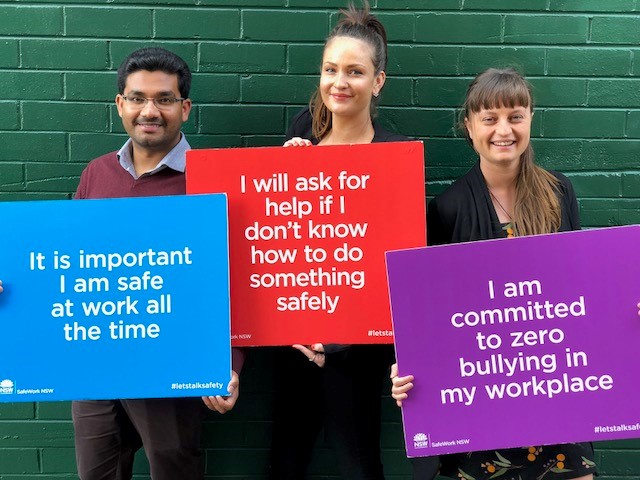
Who's responsible?
Select one of the tabs below for a quick guide:
Educator responsibilities
Employer responsibilities
Manager and supervisor responsibilities
Worker responsibilities
As a trusted source of advice and information you play an important role in helping students transition into the workforce.
Providing the correct information regarding what health and safety rights and responsibilities they have may prevent them for injury or a fatality.
Some practical ways of carrying out your duty of care responsibilities include ensuring:
- the work environment, systems of work, machinery and equipment are safe and properly maintained
- information, training, instruction and supervision are provided
- adequate workplace facilities are available for workers and any accommodation you provide to your workers is safe
- workers’ health and workplace conditions are monitored
- chemicals are handled and stored safely.
Your duties include:
- making decisions about health and safety that may affect work activities or other people
- ensuring legal requirements regarding health and safety are met
- actioning safety reports and carrying out workplace inspections
- ensuring safe work method statements are completed
- ensuring safe work practices
- conducting inductions and regular safety briefings
- participating in incident investigations
- leading by example and promoting health and safety at every opportunity.
Even if your workers are temporary visa holders, permanent resident, Australian citizen, they are covered by work health and safety laws.
- take reasonable care for their own health and safety
- take reasonable care for the health and safety of others
- comply with any reasonable instructions, policies and procedure given by their employer, business or controller of the workplace.
We’ve created these interactive diagrams that will show you some everyday safety hazards and how to avoid them in the workplace. Can you find them all?
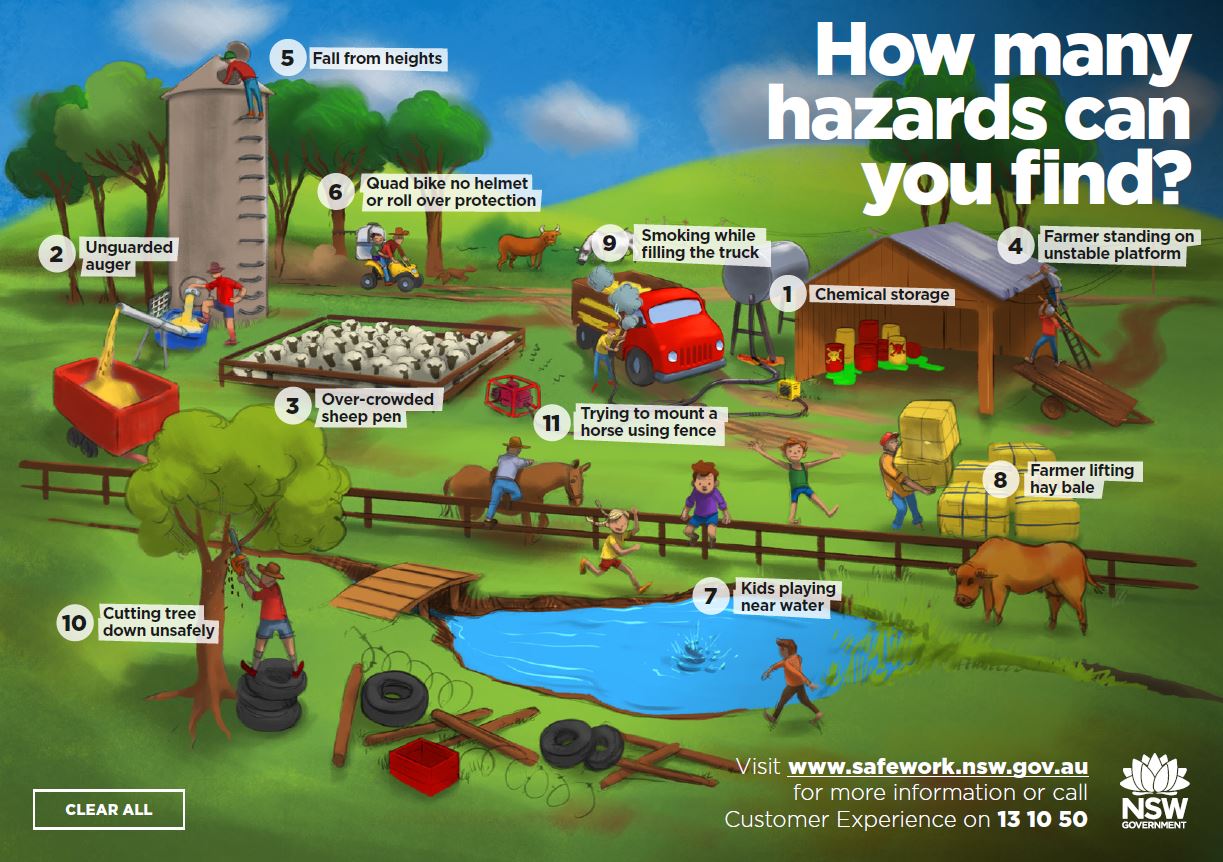
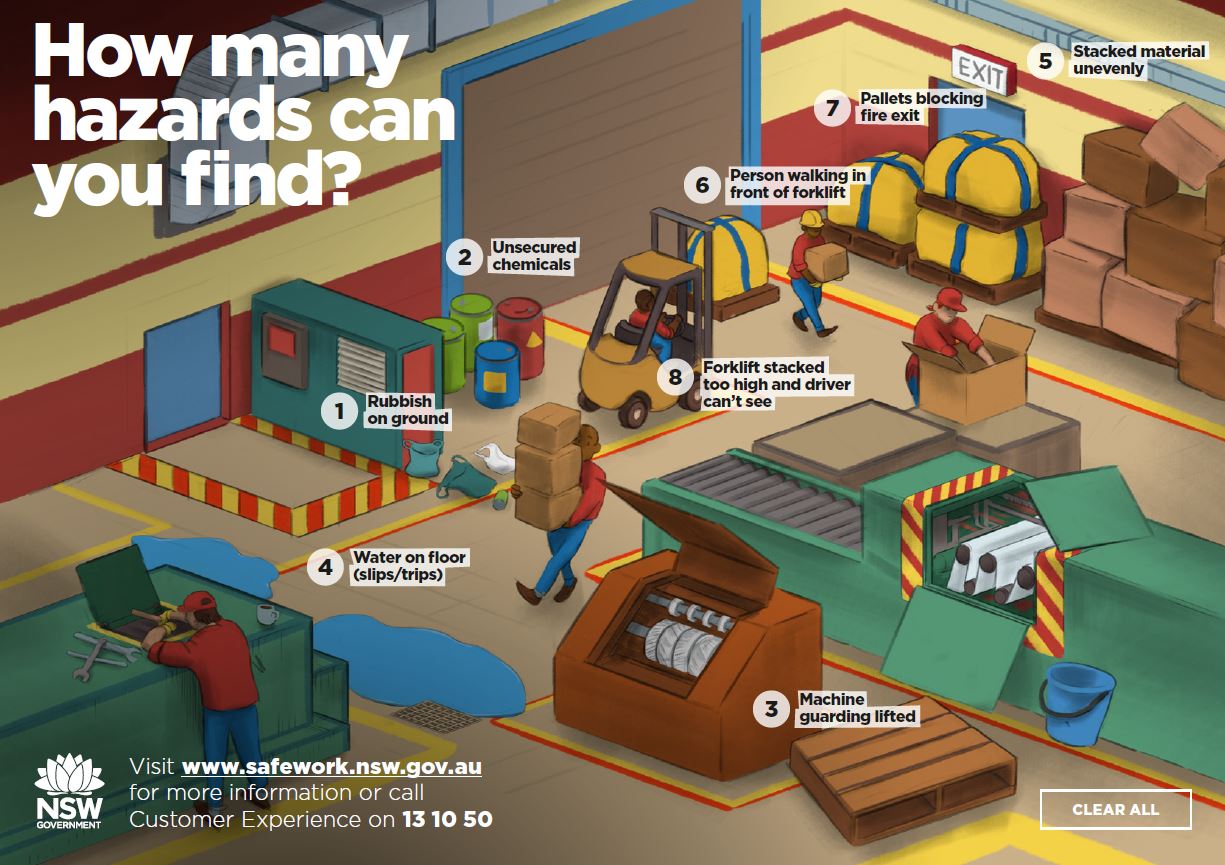
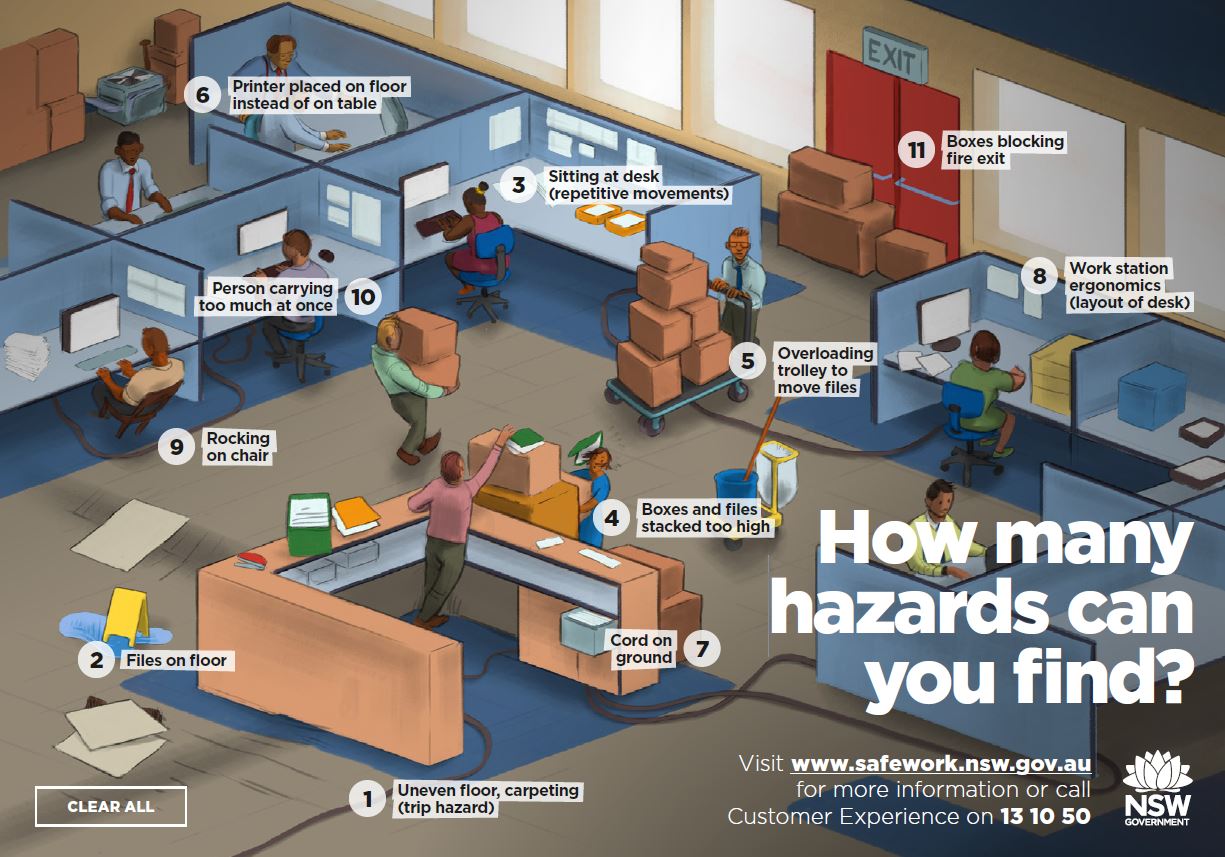
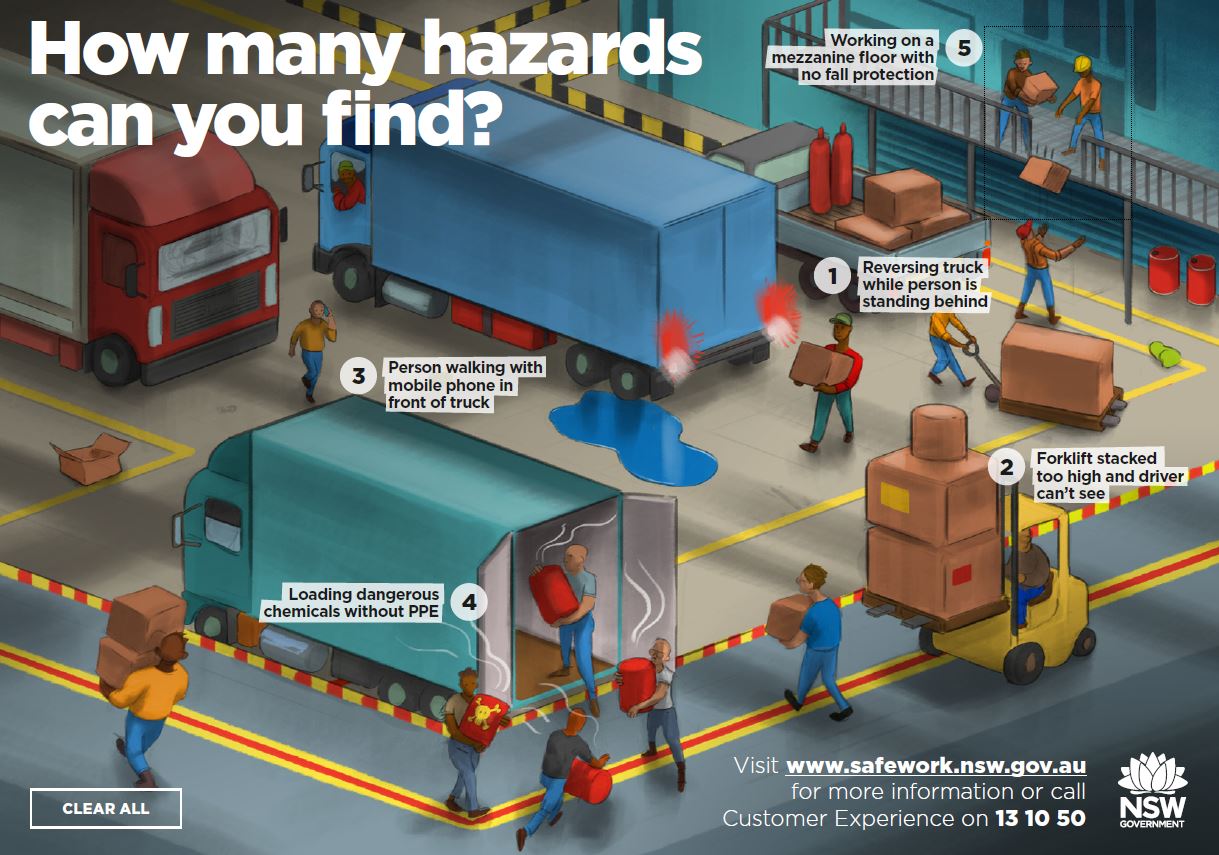
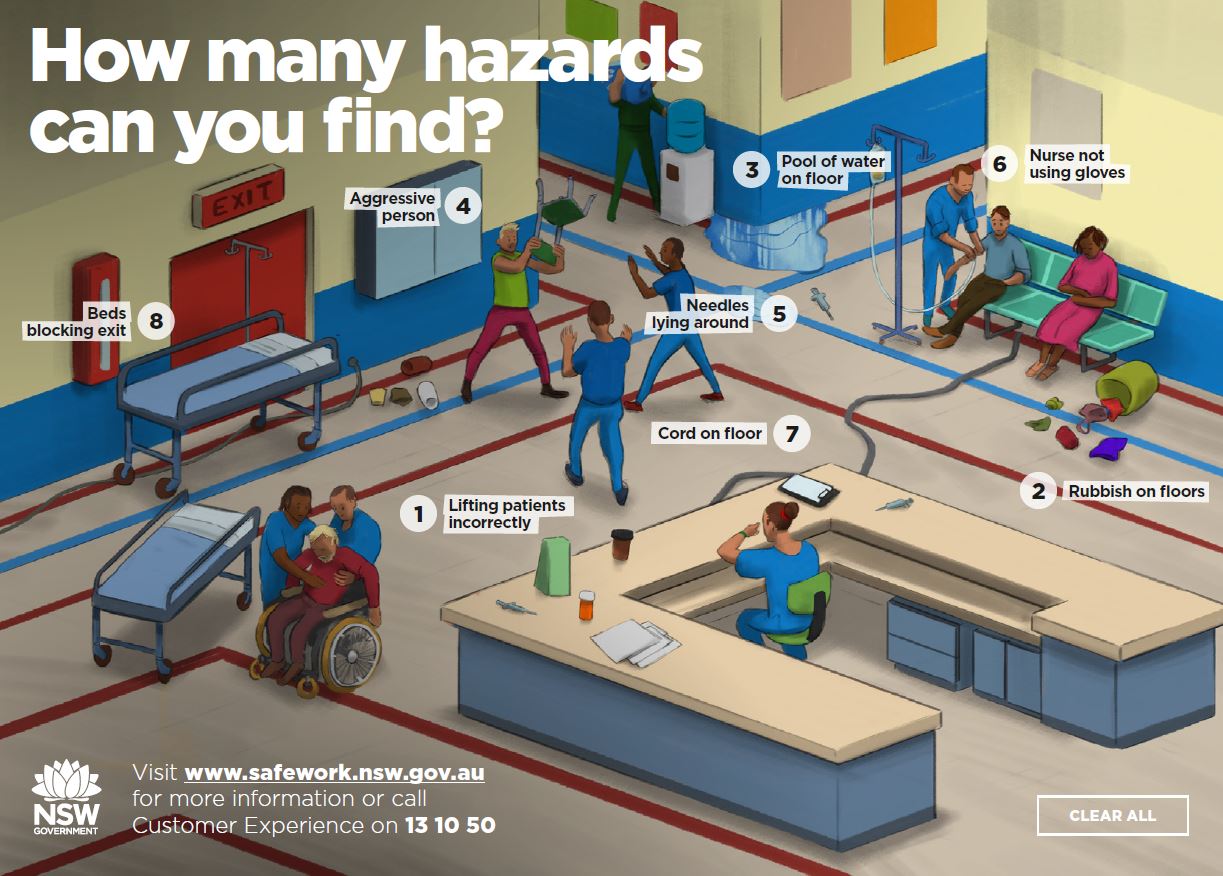
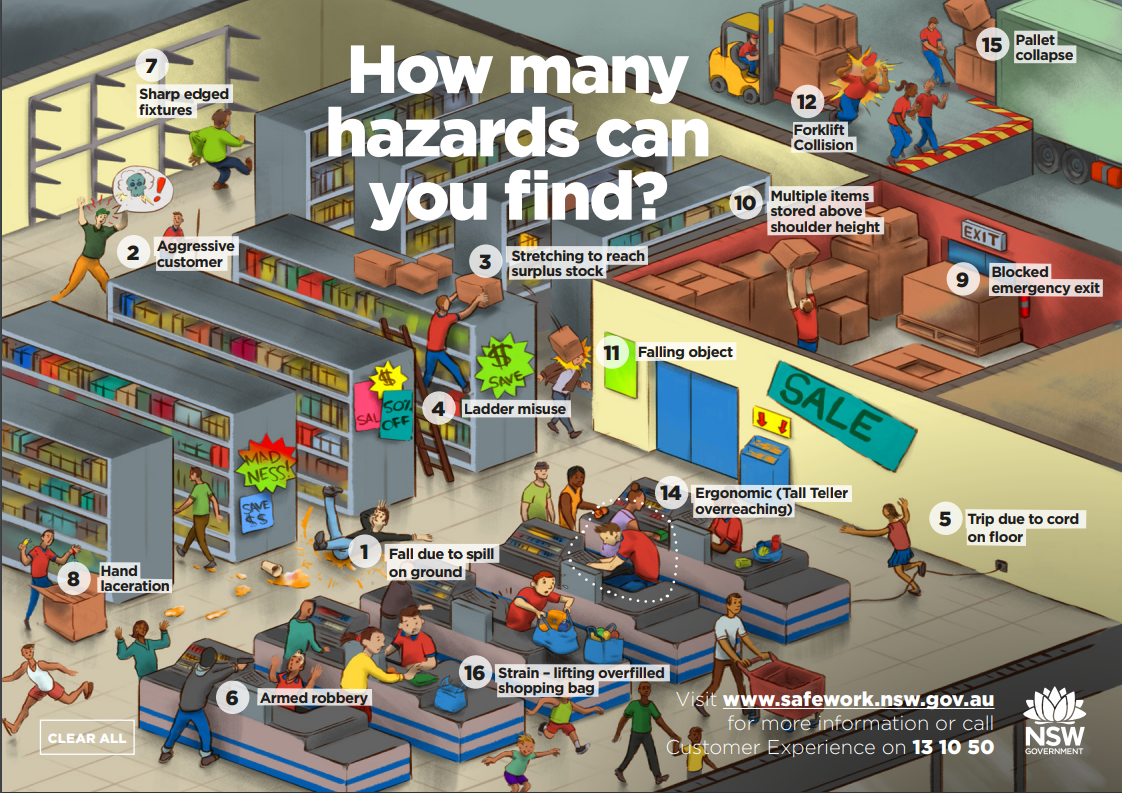
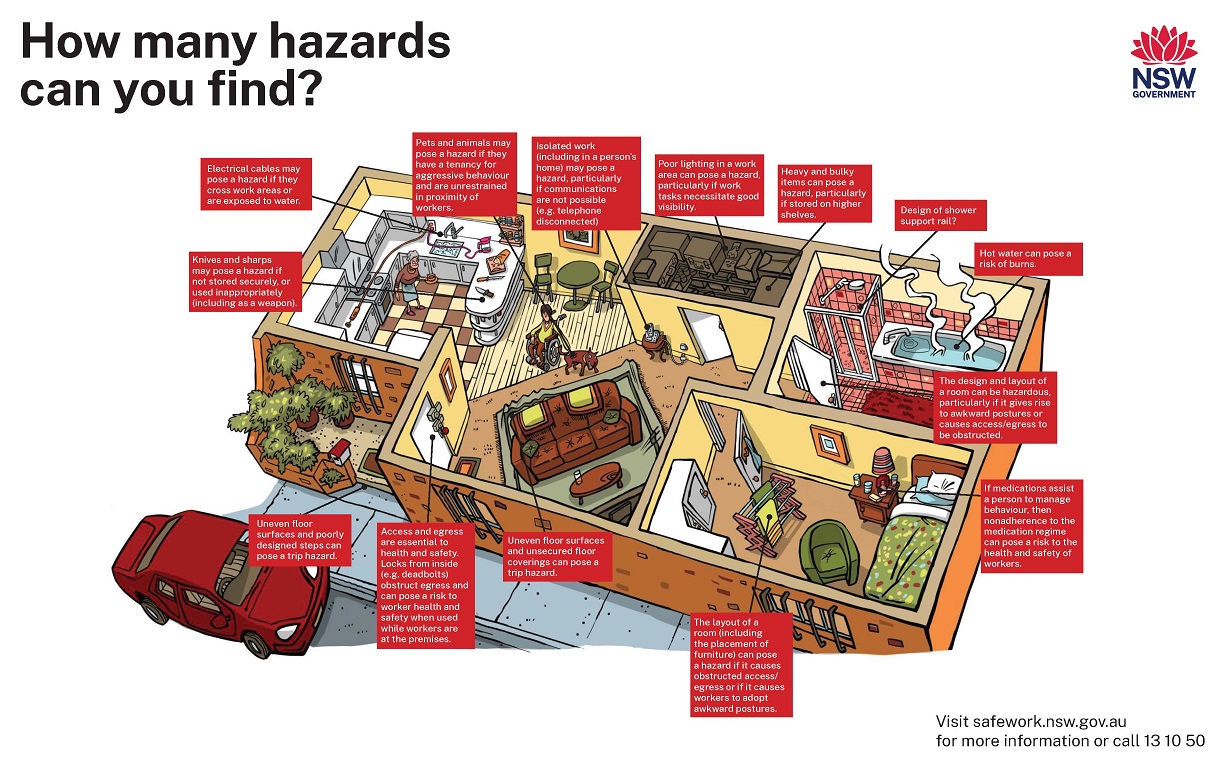
If you are unable to use the interactive PDF, you can view the workplaces and the safety hazards by clicking here.

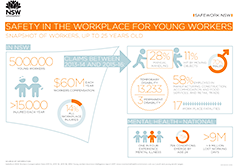
Young people are our future workforce, so protecting them from injuries and accidents at work should be everyone’s priority.
Wait, take five

Introduce the key messaging to reinforce positive safety behaviour. When teaching young workers ask them to think about these actions before a task.
1. Stop...
2. Is it safe?
3. Could it hurt someone?
4. Speak up
5. Ask
Helpful tips
Here are a few quick tips to keep your students healthy and safe. Give them out prior to a work experience placement or during general conversation about how they’re going at work.
How do they consult?
Find out how your workplace consults (communicate on work health and safety (WHS) issues.
If there is a health and safety representative (HSR or HSC), consider nominating yourself (put your hand up).
Want to know more Consultation@work
Talk it out
If not sure about something at work; why not talk it out with someone at work who's been in the job longer than you? Or ask your supervisor
During your induction ask who your contact person is for questions.
It’s not worth being injured or feeling bad. There are organisations and services that may be able to help. Don’t suffer in silence. Getting support at work
Speak up
It’s always best to raise things with your supervisor if something doesn’t seem right or you are just not sure if you are doing a task correctly.
If you feel unsafe and don’t know how to speak up or your supervisor ignores you go to the Speak Up Saves Lives app.
Everyone has rights
Even if you’re a casual, part time or on a contract you’re still entitled to the same WHS rights as a full-time employee.
Learn more to the basics your rights at work
Dealing with workplace bullying
Things you can do:
- speak up
- tell the boss / or any trusted adult
- keep a diary
- see a doctor or counsellor if your health is affected
- don’t be a bully bystander
- Let SafeWork NSW know contact us on 13 10 50, or email us or go to the Speak Up Save Lives app
- Learn more about workplace bullying
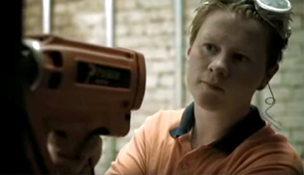
Watch the videos below to see what happens to these young works in a matter of seconds
They were selected to highlight the importance to:
- understand the risks and don’t perform tasks you haven’t done before without training, supervision or instruction
- talk and build working relationships with more experienced workers
- ask questions to make sure you understand what is expected of you
- report WHS concerns promptly, so that immediate action can be taken to resolve the issue
- know your WHS policies and procedures (remember ask questions if don’t understand)
- use required personal protective equipment.
Source: WorkSafe Victoria
Warning: these videos contain footage that some viewers may find distressing.


Popular guides and posters:
Popular web pages:
We have resources you can distribute to managers and/or supervisors.
Resources List
External resources:
Children’s safety in the workplace A printable infographic from SafeWork Australia that shows young people are especially vulnerable when it comes to safety at work
Thoughts about workplace safety A printable infographic from SafeWork Australia that shows what workers and employers are thinking and doing.
Difficult conversations with a bit of humour, this video demonstrates that many supervisors, managers and employers sometimes hesitate in having a conversation with a worker when they’ve noticed something might be wrong out of fear.
Starting a conversation This video shows that it doesn't matter if you think you don’t quite know what to say. Just by being supportive and listening, you’re helping to make a difference.
The Obedience Experiment This video is based on a series of psychological experiments conducted in the 1960s which highlighted people’s willingness to obey requests from authority figures even if those requests were harmful to themselves or others.
Brain development When does a person really become a 'grown up?' Surely age can't be the only determining factor? Laci Green looks at how the brain matures and what it means (from a scientific perspective) to be an adult.
Contact
In alphabetical order
P: 1800 670 812 E: complaintsadb@justice.nsw.gov.au | P: 13 28 65 (individuals) P: 13 72 26 (businesses) |
P: 1300 799 675 (out of hours emergency 0419 318 011) E: sydney@fwc.gov.au | P: 13 13 94 |
P: 1300 656 419 E: complaintsinfo@humanrights.gov.au | P: 13 77 22 E: newclaims@eml.com.au |
P: 9385 9588 E: admin@ncylc.org.au | P: 13 10 50 E: contact@safework.nsw.gov.au |
P: 13 10 50 | P: 131 444 (general enquiries) |
National Relay Service (24 hour service) TTY/voice calls: 133 677 Speak & Listen: 555 727 SMS relay: 0423 677 767 | P: 1800 451 524 E: nswombo@ombo.nsw.gov.au |
Office of eSafety Commissioner P: 1800 880 176 | P: 9689 6200 |
Translation Information Service P: 131 450 (24 hour service) | National Relay Service (24 hour service) TTY/voice calls: 133 677 Speak & Listen: 555 727 SMS relay: 0423 677 767 |