
This safety alert highlights the potential risks of a scaffold collapsing and provides information about preventing it from happening.
Background
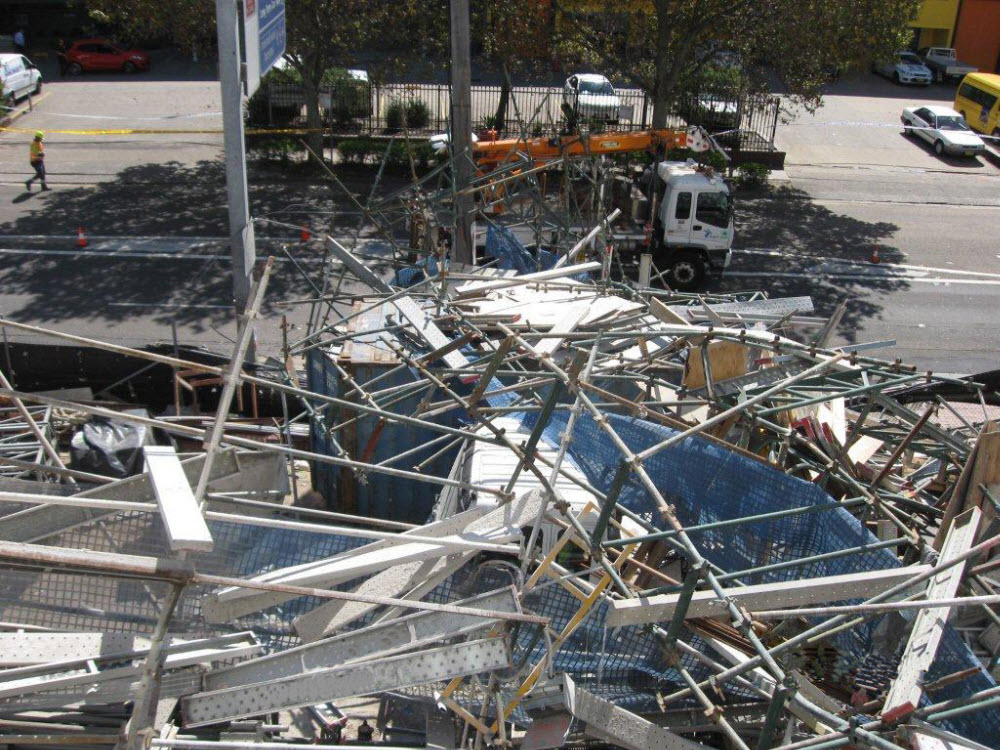
In a recent incident, workers were injured and others were put at serious risk when a scaffold collapsed onto a public street. In another incident, a scaffold collapsed into a laneway and neighbouring properties, fortunately without injuring anyone.
In both instances, the scaffold recently had been reconfigured during the final stages of a building construction.
Actions required
- Ensure the scaffold remains stable and supports the loadings imposed at all times – eg during erection, in situ, during and after any alterations, and when dismantling.
- Use a scaffold that is suitable for the tasks and construction process.
- Ensure the scaffold can withstand any anticipated loads or forces – eg strong winds.
- Ensure the scaffold is adequately tied to its supporting structure, in accordance with instructions from a competent person – if this is not possible, consult with the scaffold designer, manufacturer, supplier or an engineer.
- Develop systems of work that allow construction activities, such as bricklaying, painting, rendering, glazing and cladding installation to be completed without unplanned changes to, or removal of, scaffold ties – eg work down from the top of a building as the scaffold is progressively dismantled, or tie the scaffold to its supporting structure so that it does not interfere with the work.
- Ensure only competent persons with a relevant class of high risk work licence for scaffolding undertake scaffolding work*,including making alterations to existing scaffolding.
- Have a competent person who holds the same or higher class of high risk work licence appropriate to the class of scaffolding regularly inspect the scaffolding ties and other scaffolding equipment, to ensure they have not been modified or altered by unauthorised persons.
- Know the duty rating (light, medium, heavy or special) and number of decks that can be loaded within a bay and don’t overload the scaffold – eg by storing scaffold components on decks when making alterations.
- Provide all workers adequate information, instruction, training and supervision regarding the control measures required to prevent the collapse of the scaffold.
- Display warning signs to prevent unauthorised access to the scaffold when it is incomplete and left unattended.
- Ensure the scaffold can’t be damaged by vehicles, plant, equipment or materials.
- Prepare a safe work method statement.**
*Scaffolding work means the erection, alteration or dismantling of a temporary structure erected to support platforms from which a person or object could fall more than four metres.
**For high risk construction work, for example when there is a risk of a person falling more than two metres, you must prepare and comply with a safe work method statement in accordance with Part 6.3, Division 2 of the Work Health and Safety Regulation 2011.
Further information
The general guide for scaffolds and scaffolding work provides detailed information about erecting, dismantling and modifying scaffolds, tying and anchoring, hazards and risk controls.
Information about scaffolds is also available in the Australian Standards:
- AS/NZS1576 Part 1: Scaffolding – general requirements
- AS/NZS4576: Guidelines for scaffolding