The construction industry is one of NSW’s highest risk industries. Every year, too many workers are killed or injured on NSW construction sites.
The most common causes of serious injury or death on construction sites are:
falls from heights
contact with electricity
being hit by falling objects
moving plant.
This guide provides useful information for common health and safety issues on small construction sites relevant to New South Wales WHS laws. It will help you manage the health and safety of workers and others on and around your worksite. Links to more detailed information are included where relevant.
Acknowledgements
After the devastating earthquakes that struck Christchurch in 2011, SafeWork NSW Inspectors provided on-the-ground assistance to help rebuild Christchurch safely. The New Zealand Absolutely Essential Health and Safety Toolkit was recognised by industry and the Inspectorate alike as a useful tool to assist small builders comply with safety requirements. Their pocket toolkit inspired NSW to develop this Pocket Guide to Construction Safety.
Work Health and Safety Legislation and Codes of Practice
SafeWork NSW administers and enforces workplace health and safety laws in New South Wales, primarily under the Work Health and Safety Act 2011 and WHS Regulation 2025.
Codes of Practice
From 1 July 2026, the WHS legislation outlines that a PCBU must comply with an approved code of practice or follow another method to manage hazards and risks, such as a technical or industry standard that provides an equivalent or higher standard of health and safety than the standard required in the code. The Construction Work Code of practice provides guidance on managing construction-specific risks, whereas the other Codes provide control measures for particular hazards or risks. Where multiple Codes apply, the expectation is to meet the highest standard or control reasonably practicable.
If there is a serious injury or illness, a death or a dangerous incident, you must report it to us immediately on 13 10 50 as an urgent investigation might be needed.
Incidents can be notified 24 hours a day, 7 days a week.
General information and resources for construction sites
Access the SafeWork NSW Building and Construction webpage via the search instructions below. The webpage provides useful information and material including fact sheets, guides, videos, toolbox talks, checklists and podcasts.
As an employer or business owner, do you make sure your workers:
hold a General Construction Induction training card (“white card”)?
are inducted to the site?
are trained, competent and fit to do the job safely and without putting their own or others’ health and safety at risk?
have adequate supervision and are given clear instructions?
have access to hand washing and toilet facilities?
have the correct tools, equipment, plant and protective clothing to do the task safely?
are involved in discussions or toolbox talks about health and safety issues?
are covered by your workers compensation insurance policy?
Contracting and subcontracting
If you are a principal contractor, or a contractor who subcontracts work to others, do you:
check the health and safety performance of the people you plan to work with?
check that their workers compensation is current and has a sufficient level of coverage?
give them the health and safety information they need for the work?
collect and review their Safe Work Method Statements for High Risk Construction Work and discuss safety prior to commencing?
hold regular discussions about how the work is going, including safety problems and concerns?
make sure that you have provided everything you are required to (such as safe scaffolds, the appropriate plant, access to toilets and other amenities)?
monitor subcontractors’ performance and record any non-conformances and corrective actions taken?
ensure that the principal contractor has prepared a WHS management plan (if the construction work costs more than $250,000) and reviewed it?
The Code of Practice for Construction Work is a practical guide to achieving work health and safety requirements under the WHS Act and Regulations.
It contains specific information and templates relating to:
safe work method statements
work health and safety management plans
induction requirements.
The Housing Industry Site Safety pack provides the templates and framework for a WHS system to assist small subcontractors (0 – 10 workers).
This chapter provides questions to help you manage the hazards and risks on site. If you answer yes to the questions, you are on your way towards achieving compliance.
Warning: Extreme care should be exercised for any work on roofs, scaffolding and/or ladders.
Have you planned the work properly and identified suitable precautions to make sure work can be carried out safely? (Precautions include safe access, management of hazards such as brittle roof, open voids, unprotected edges, adverse weather conditions and site conditions)
Can you avoid working at heights by conducting work from the ground?
If you can’t work from the ground, have you ensured fall prevention equipment is used such as scaffold, guard rails or an elevating work platform?
Have you ensured there is appropriate training and fit-for-purpose controls to prevent workers from falling from heights?
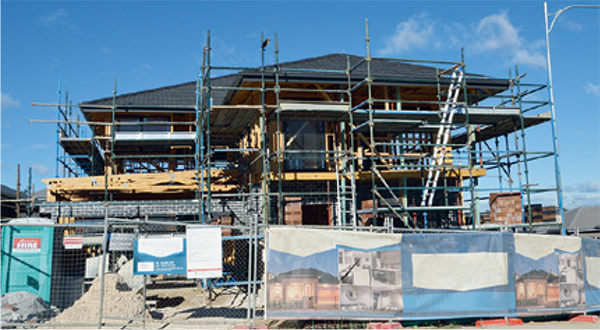
Is the scaffold erected, altered and dismantled only by licensed scaffolders? (A high risk work (HRW) licence is required where a person can fall more than 4 metres.)
Have you told unlicenced workers they must not alter the scaffold and advised them on how to arrange alteration if they need access?
Is the scaffold erected using safe work methods and in accordance with the supplier’s and/or manufacturer’s instructions and relevant Australian Standards?
Has written confirmation (e.g, a hand-over certificate) been provided to verify the scaffold is complete, safe and compliant?
Has a competent person inspected the scaffold before first use, after an incident that could affect the stability, after repairs and at least every 30 days?
Are all standards provided with base plates and, where necessary, timber sole-boards?
Is the scaffold adequately braced?
Is the scaffold adequately secured to the building or structure to prevent collapse?
Are there handrails, mid-rails and toe boards (or other suitable protection) at every edge to prevent people and objects from falling?
Are guards provided to prevent stacked materials such as bricks falling from scaffolds (e.g, such as kickboards, brick guards or steel mesh)?
Are the working platforms fully planked and are the planks arranged to avoid slipping or tripping?
Are there effective barriers or warning notices in place to stop people from using an incomplete scaffold?
Has the scaffold been designed to carry the weight of people and materials stored on it, and are these evenly distributed?
Are gates (including guardrails being used as gates) and hatches across access points self-closing?
Is the gap between the building/structure and the scaffold less than 225 mm?
Are scaffolds at least 4 m from powerlines? If not, have you consulted with the service provider?
Are the wheels of mobile scaffolds locked when in use and are the platforms cleared before they are moved?
Are outriggers on mobile scaffolds in place and secure?
Stairways and voids
Are all voids protected by covers that are secured in place and clearly marked as voids?
Are all stairways and/or ladder access points protected against falls risks by the installation of fences and/or barriers?
See how to prevent falls using simple void protection
How to prevent falls on a construction site using temporary stairs
How to prevent falls on a construction site using void covers
Ladders
Choose the right tool for the job – can you buy or hire some alternative equipment that would provide a safer means of access (such as mobile scaffold, elevated work platform or platform ladder)?
Is the ladder in good condition and industrial rated (120 kg)?
Is the ladder set up on a flat, stable surface?
Do you need ladder safety devices like leg levellers, anti-slip gutter guards and stabilisers?
Is the ladder high enough so that users don’t have to over-reach?
Are materials being transported safely (i.e, not carried up a ladder)? Use a pulley or rope and bucket system instead
Extension ladders
Is the ladder secured at the top and bottom to prevent it slipping sideways and outwards? If this isn’t possible, have someone hold it in place while in use.
Does it extend at least 1 m above the landing place?
Is it resting against a solid surface that can support it and you?
Is it angled at a ratio of 1:4 (the base of the ladder 1 m away from the structure for every 4 m of height)?
A-frame style step ladders
Is the ladder tall enough so that users don’t have to stand on the top two rungs? If not, a taller ladder is required.
Are all four feet of the ladder in contact with the ground, and are the locking devices secured?
Are both feet and one other point of contact e.g., hand, waist or torso, in contact with the ladder? If not, you need a taller ladder or a safer piece of equipment.
Roofs
Has an exclusion zone been set up below the roof work?
Are roof workers trained and experienced to recognise the risks and are they competent to do the work?
Roofs under construction
Is there temporary edge protection, such as scaffold or safety rails, to stop people or materials falling?
Have you considered netting or other fall prevention devices?
Work on roofs
Has the angle/pitch of the roof been considered when determining fall prevention measures?
Have you identified fragile or brittle roof materials that are not safe to walk on, such as concrete tiles, cement sheets, asbestos or clear plastic sheeting and sky lights?
Have you installed temporary edge protection to stop workers falling from the edge of the roof, such as scaffold, roof rails, or an elevating work platform (EWP)?
Have you installed protections to stop people falling through fragile or brittle roofs, such as guard rails, covers, walkways/crawl boards, exclusion zones?
Work positioning systems (harnesses)
Note: Work positioning systems can only be used if it is not reasonably practicable to provide physical edge protection.
Harnesses require the correct design, set up and user behaviour to ensure its effectiveness.
Total restraint technique is preferred over fall arrest, as it stops the user from reaching the edge or fall hazard.
Fall arrest systems must only be used as a last resort, and cannot be safely used on a single storey building.
Are workers trained and competent in the setting up and safe use of harnesses if required?
Has an emergency heights rescue plan been developed for harness-based work?
For underground services, have you planned, prepared and potholed before proceeding?
Have you clearly identified, marked and/or isolated existing services present on site (above and below ground, such as electric cables, gas mains, water mains and phone lines)?
Where there are overhead powerlines, has the service provider been contacted?
Where there are overhead lines, has the electricity supply been turned off, or have other precautions been taken, such as providing ‘tiger tails’, ‘goal posts’ or taped markers and/or barriers as an identifier to prevent inadvertent contact?
For electrical tools on site, is a Residual Current Device (RCD) or Isolating Transformer used and tested?
Are tools and equipment well-maintained, checked regularly for defects and taken out of service if a defect is found?
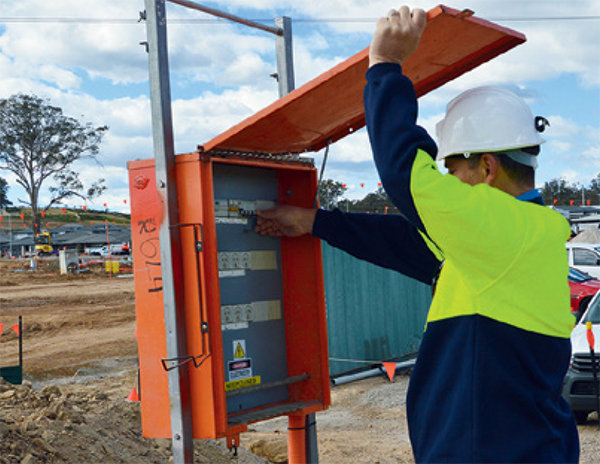
Are temporary switchboards, tools and electrical items regularly inspected, tested and tagged by a competent person?
Are cables and leads protected from being damaged or creating trip hazards?
Can everyone get to their place of work safely – and work there safely?
Are access routes well defined, in good condition and clear of debris and materials?
Has suitable edge protection been installed?
Are voids protected and clearly marked with fixed covers to prevent falls?
Is the site tidy and are materials segregated and stored safely?
Is there sufficient lighting for access and egress purposes and for people to perform their work safely?
Trenches and excavations
Have you obtained and kept copies of current underground essential services information (location and depth) relating to the workplace and adjacent areas by contacting Before you Dig Australia?
Have you planned, prepared and potholed before proceeding?
Are trenches/excavations secured to prevent unauthorised access, falls and falling objects?
Is there a support system in place to prevent collapse such as shoring, benching or battering?
Is a safe method used for putting in the support without people working in an unsupported trench?
Is there safe access and egress to and from the excavation?
Is the excavation fenced off from unauthorised access?
Could the excavation affect the stability of neighbouring structures or services?
Are materials, spoil and mobile plant kept away to prevent loading and potential collapse of the edge of the excavation?
Is the excavation regularly inspected by a competent person, such as a geotechnical engineer?
Are the results of inspections recorded and communicated to workers?
Have you considered the potential risk of silica exposure? (see silica section for more info).
Have you planned your method of loading/unloading materials?
Is there an exclusion zone around the loading/unloading area?
Do mechanical aids and other lifting equipment have a current certification and are they well maintained?
Before removing straps/stabilisers, have you checked that the load has not moved or destabilised during the journey?
Do you have to access the back of the vehicle or truck bed to avoid work at heights, or can the preparation work be done from ground level?
Do operators of vehicle loading cranes with a capacity of 10 metre tonnes or more hold a high risk work licence?
Do operators of personnel and/or material hoists hold the appropriate high risk work licence?
Hazardous manual tasks
Hazardous manual tasks are a leading cause of musculoskeletal disorders.
Can you:
Ensure materials are stored close to where they will be used?
Ensure workbenches are at a suitable height for workers?
Choose lighter materials?
Where possible, eliminate or reduce:
Repetitive or sustained force
High or sudden forces
Repetitive movement
Sustained or awkward posture
Exposure to vibration
In your planning have you considered the work area design and layout, systems of work, and the work environment?
Have you considered the nature, size, weight and number of objects handled?
Have you provided suitable information, training and instruction for safe processes and procedures, including the use of mechanical aids and other equipment?
Use fit-for-purpose mechanical aids such as cranes, hoists, trolleys?
Use ergonomically designed tools and equipment (e.g., hand tool with vibration dampener)?
Provide enough resources to promote a reasonable pace and flow of work?
Note: The hierarchy of control should be considered in managing the risk of hazardous manual tasks. A combination of risk controls is necessary to ensure the risk of musculoskeletal disorders are minimised effectively.
Administrative controls such as training in lifting techniques are the least effective way in managing musculoskeletal disorders and cannot be used as the main control measures to manage the risk.
Tools and machinery
Are the right tools or machinery being used for the job and in accordance with manufacturer’s specifications?
Are you complying with the manufacturer’s guidelines for inspections, maintenance and repairs?
Are all moving parts guarded?
Are guards adequately secured and in good working order?
Are tools and machinery maintained in good condition and are all safety devices operating as per their intended use?
Employers are required by law to consult with their workers to identify psychosocial hazards in the workplace.
Have you identified psychosocial hazards on site?
Are your workers aware of how to report psychosocial hazards?
Is work scheduled to allow enough time for completion without rushing? Are workloads practical and manageable, with consideration given to any workflow changes such as machinery breakdowns or unplanned absences?
Is fit-for-purpose plant, machinery and equipment used to reduce physical workloads?
Psychosocial hazards include but are not limited to:
Role overload, or lack of role clarity
Exposure to traumatic event
Exposure to hazardous environments
Lack of support from supervisors or co-workers
Bullying, violence and harassment including sexual harassment
Remote or isolated work
Factors like these and others can contribute to mental ill health.
Know the signs of mental ill-health and act early
Changes in mood, behaviour, performance or appearance can be a sign someone needs support with their mental health. They may be frequently absent from work or not performing to their usual standard.
Start a conversation
Have a private conversation about the changes you’ve noticed, at a time and place that suits you both. If they do not want to talk, let them know they can come to you for support when they’re ready.
Connect to support
Let them know that it’s OK to not be OK. Encourage them to contact support services or contact them together, if they need it.
Plan and make changes
Offer workplace adjustments, such as days/hours worked or reduce workload. Make sure the work environment is safe. Communicate and model acceptable behaviour at work.
Stay connected
Stay in touch regularly, whether off or back at work. Review how their recovery is going and make further changes to their work as needed.
For more information and resources on promoting, managing and supporting workplace mental health and your duties go to:
Have you identified harmful chemicals and substances for example lead, solvents, paints?
Is there a register that lists all the hazardous chemicals (except certain consumer products) used, stored and handled at your workplace?
Do you have a current safety data sheet for any hazardous chemicals used?
Have you identified and implemented control measures to prevent or control exposure to hazardous chemicals and substances by:
doing the work in a different way, to remove the risk entirely?
using a less hazardous chemicals?
using chemicals in a well ventilated area, or using forced air ventilation?
installing warning signs to show where work involving hazardous substances is taking place?
Have workers received information and training so they know what the risks are and what they need to do to avoid those risks?
Is personal protective equipment (PPE), respiratory protective equipment (RPE) and any other safety equipment provided?
Do you have procedures and PPE to prevent contact with wet cement (this can cause dermatitis and cement burns)?
Have you have arranged health monitoring for employees exposed to certain hazardous substances such as asbestos, lead, silica, sensitisers such as two-pack adhesives or coatings containing isocyanates?
Are there adequate wash facilities available?
Are hazardous chemicals stored and disposed of appropriately?
Businesses must establish effective dust suppression controls to prevent workers being exposed to crystalline silica substances (CSS). Are you identifying and reviewing that effective control measures are in place with:
Eliminating silica dust exposure by using products that do not contain silica, or the need to cut, grind or drill into silica products?
Substituting silica containing products with materials containing no silica or less silica in them?
Isolating silica dust exposure by limiting work to an enclosed or segregated area?
Managing silica dust through engineering controls such as:
using dust capture systems, on-tool dust extraction and H or M class vacuums
water suppression systems and wet cutting in cab filtration and containment.
The appropriate management and disposal of silica dust?
The review and maintenance of dust suppression equipment in accordance with the manufacturer’s recommendations?
Workers being provided respiratory protective equipment (RPE) approved under AS/NZS 1716, to assist in the management of silica dust exposure? For example, RPE with a P2 rating minimum.
Have workers been provided annual fit testing of RPE?
Are workers who wear RPE clean shaven?
Have workers been consulted on the hazards associated with silica dust?
Have workers being provided adequate training and instruction, and safety control measures have been communicated and are understood by workers?
Have you considered your obligations in identifying whether the processing of crystalline silica substances (CSS) is high risk?
If Yes:
Do you have a Silica Risk Control Plan or Safe Work Method Statement (SWMS) in place?
Have you identified all high-risk CSS processing activities?
Have you provided approved training for workers?
Do you have control measures implemented to control the risks?
Have you provided air monitoring for workers, and report if the results exceed the workplace exposure standard (WES)?
Have you identified the need for health monitoring for workers?
You must record the risk assessment in writing.
Managing the risk of silica exposure requires ongoing assessment and capability to effectively meet work health and safety obligations including the identification of high-risk processing of silica. Duty holders are encouraged to seek guidance from suitably qualified industry professionals where required, and can contact SafeWork NSW on 13 10 50 for advice, information and support.
Have you identified the materials you are working with? (Properties built before 1990 are likely to contain asbestos material)
Have you engaged a licensed/qualified asbestos removalist?
Have they provided you with a copy of their asbestos removal control plan, including their safe work method statement?
For licensed work, after the work is completed, have they provided you with an asbestos clearance certificate issued by a licensed asbestos assessor or an independent competent person?
Has SafeWork NSW been notified 5 days prior to the asbestos removal work?
Has the asbestos been disposed of appropriately to a licensed landfill?
Have you identified and assessed workers’ exposure to noise level and duration?
Can the noise be reduced by using different working methods or selecting quieter plant, (such as fitting breakers and other plant or machinery with silencers)?
Have workers had information and training so they know how to avoid those hazards and risks?
Are people not involved in the work kept away from the source of the noise?
Is suitable hearing protection provided and worn in noisy areas?
Have hearing protection zones been identified and signed appropriately?
Have you provided audiometric testing (including base line testing) for employees exposed to high levels of noise?
Is suitable personal protective equipment (PPE) provided to protect the worker for the tasks they are performing? This may include hard hats, safety shoes, hand, eye and ear protection.
Have workers been trained in the safe use, care and storage of protective equipment?
Do workers wear their protective equipment, and do they wear it correctly so that it fits?
Can you organise the work to reduce exposure to the sun during peak UV radiation times?
Is there shade/shelter available on site?
Are workers using a combination of sun protection measures, such as sunscreen, long sleeves, long pants, collared shirts, wide brimmed hats or legionnaire caps and UV-rated wraparound sunglasses?
Is there drinking water available on site and suitable breaks to encourage workers to stay hydrated?
Can heavy physical work be scheduled to cooler times of the day?
Is wet-weather clothing provided for those working in wet conditions?
This publication may contain information about the regulation and enforcement of work health and safety in NSW. It may include some of your obligations under some of the legislation that SafeWork NSW administers. To ensure you comply with your legal obligations you must refer to the appropriate legislation.
This publication does not represent a comprehensive statement of the law as it applies to particular problems or to individuals or as a substitute for legal advice.
You should seek independent legal advice if you need assistance on the application of the law to your situation.
This material may be displayed, printed and reproduced without amendment for personal, in-house or non-commercial use.